2026 Best Radial Insertion Machine for Efficient Production Solutions?
In the realm of manufacturing, the Radial Insertion Machine serves as a cornerstone for enhanced efficiency. Leading industry expert John Williams emphasizes, "The right machine can significantly impact production speed and quality." This statement highlights the critical role of technology in modern production processes.
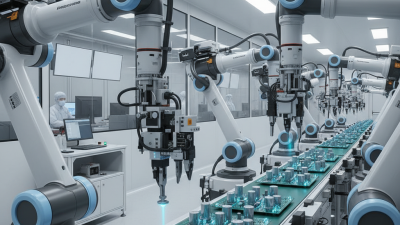
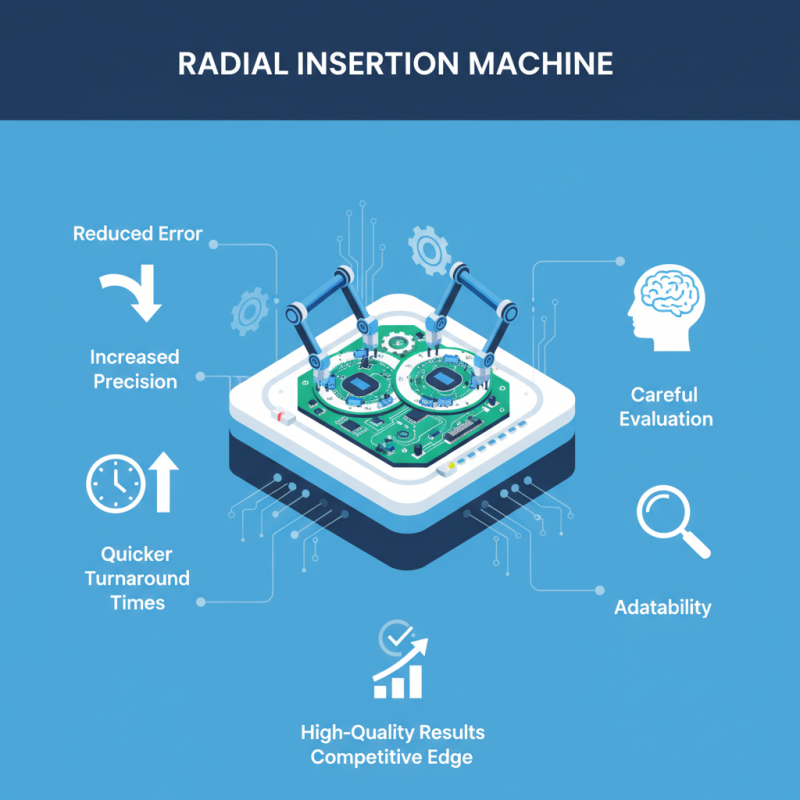
As 2026 approaches, businesses face increasing demands for operational excellence. The Radial Insertion Machine stands out with its ability to streamline complex assembly tasks. Its innovative design reduces human error and boosts precision. Companies utilizing this technology report quicker turnaround times, a crucial factor in today’s fast-paced market.
However, not all machines deliver the promised efficiency. Some models may fall short, lacking the required adaptability to various components. Organizations must carefully evaluate their choices to find machines that genuinely meet their needs. In the quest for optimal solutions, understanding the nuances of Radial Insertion Machines becomes essential for staying competitive and producing high-quality results.
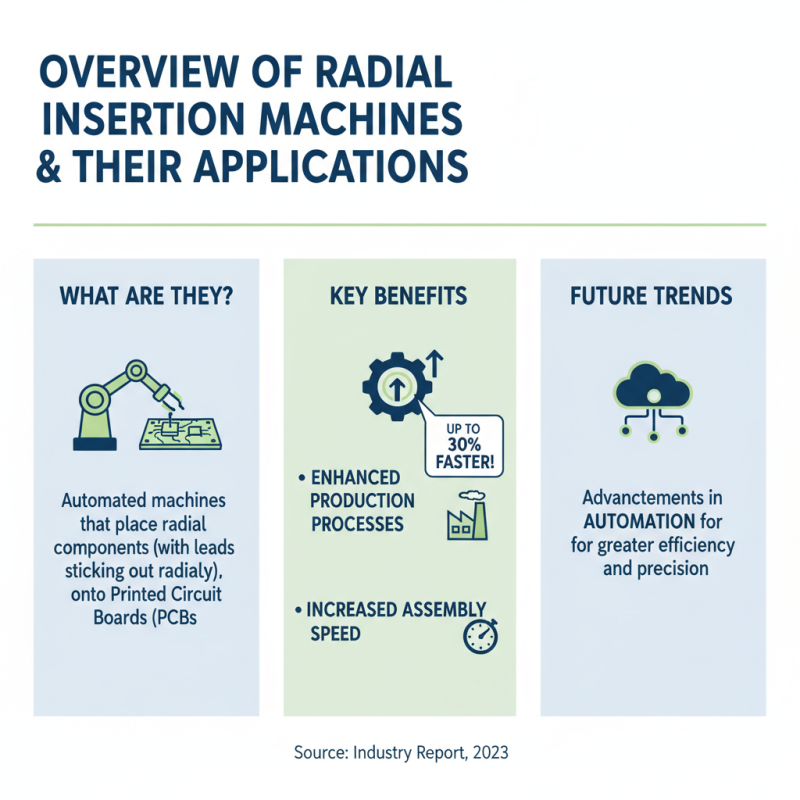
Overview of Radial Insertion Machines and Their Applications
Radial insertion machines are crucial in various manufacturing sectors. They efficiently place components into printed circuit boards, enhancing production processes. According to a recent industry report, these machines can boost assembly speed by up to 30%. The technology is advancing rapidly, with automation becoming a key focus.
Applications of radial insertion machines span across electronics to automotive manufacturing. In the electronics sector, they handle components like capacitors and resistors. This versatility allows manufacturers to meet diverse customer needs. However, integrating this technology can present challenges, including high initial costs and the need for specialized workforce training.
Moreover, as production scales, maintaining machine precision becomes critical. A report noted that inaccurate component placement can lead to a 15% increase in failure rates. This underscores the importance of ongoing calibration and quality checks. Companies looking to adopt these machines must weigh benefits against potential downsides. Investing in proper training and maintenance can significantly reduce operational hiccups.
Key Features to Look for in the Best Radial Insertion Machines
When seeking the best radial insertion machines, certain key features stand out. Reliability is paramount. A study by the Association of Manufacturing Technology indicates that downtime can cost manufacturers up to 5% of their annual revenue. Thus, machines should boast robust designs and minimal maintenance needs.
Speed is another crucial factor. High-output machines can produce up to 2,000 components per hour. This efficiency can significantly enhance overall productivity. However, achieving high speeds often risks compromising precision. A balance must be struck between speed and accuracy. Users must scrutinize specifications to ensure machines meet their production standards.
Integration capabilities are also important. The ability to connect with existing assembly lines and software enhances workflow efficiency. Industry experts report that compatible systems can reduce training times by 40%. Addressing these aspects can significantly impact production outcomes. Remember that even the best machines may require adjustments and calibrations over time to maintain peak performance.
Comparative Analysis of Top 2026 Radial Insertion Machines
In the quest for manufacturing efficiency, selecting the optimal radial insertion machine is crucial. Various comparative studies show that production speed can increase by up to 30% with the right equipment. These machines play a vital role in sectors like electronics and automotive manufacturing. A recent industry report highlighted that the best models in 2026 will feature advanced automation capabilities. Machines with AI integration can significantly reduce setup times and errors.
When evaluating different machines, consider their throughput and adaptability. Some devices excel in high-volume production, while others are better suited for diverse product lines. Remember that a machine's versatility may come at a premium. Performance metrics, such as the average insertion time, can vary widely among models. Some top performers can achieve leveraging speeds of under 5 seconds per insertion, which is impressive.
Tip: Regular maintenance can enhance performance and lifespan. Ensure your team is trained for troubleshooting minor issues. Additionally, review your production needs regularly. Reassessing requirements can lead to better machine choices over time. Don't hesitate to consult experts for insights tailored to your specific challenges. Each machine has strengths and weaknesses; make informed decisions for long-term gains.
Factors Influencing Production Efficiency in Radial Insertion Processes
In radial insertion processes, production efficiency relies on multiple factors. Machine precision plays a significant role. An accurate machine ensures proper insertion, reducing errors. When components are inserted correctly, downtime decreases. This results in faster production rates.
Operator skill is another critical element. Experienced operators can troubleshoot issues quickly. They understand the intricacies of the equipment. Training programs can enhance these skills, but even then, challenges may arise. A skilled operator might face unexpected machine failures, impacting efficiency.
Moreover, the quality of components affects the overall process. Poor-quality parts can lead to defects. These defects require rework, causing delays. It’s essential to source reliable materials consistently. Yet, even high-quality parts can sometimes fail during insertion, prompting a review of insertion techniques. Balancing these factors ensures optimal production outcomes.
Future Trends in Radial Insertion Technology and Innovations
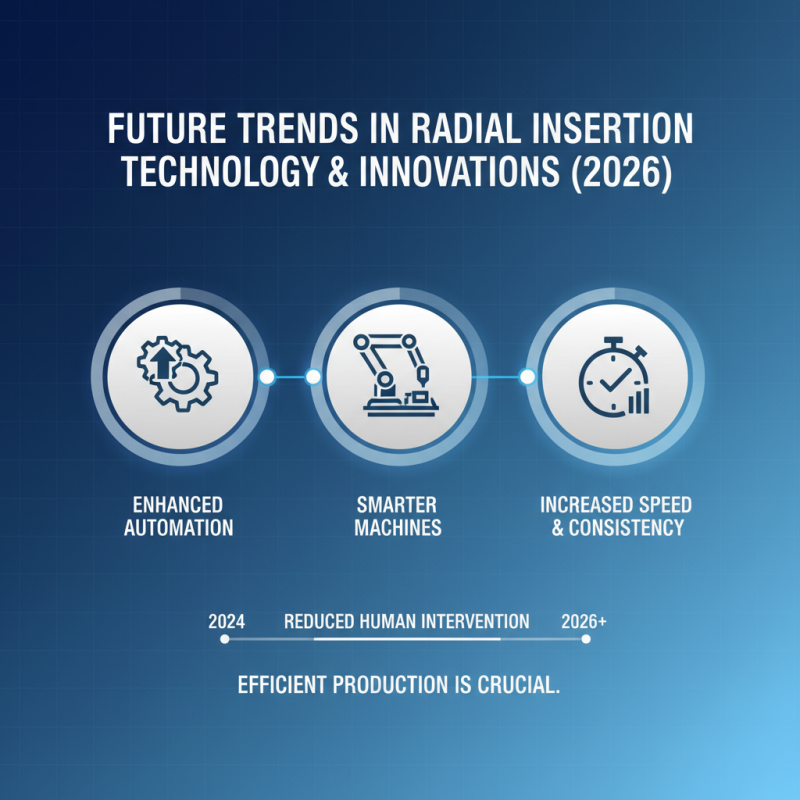
In the realm of radial insertion technology, innovation is crucial for efficient production. As we approach 2026, several trends are shaping the industry. Enhanced automation is one of these trends. Machines are getting smarter, reducing human intervention. This increases speed and consistency.
Another significant trend is the integration of AI. AI algorithms can track performance in real-time. They analyze data to optimize insertion processes. This leads to fewer errors and improved quality control. However, it raises questions about job displacement. The industry must find ways to balance technology and workforce needs.
Tips: Invest in training for your team to adapt to new technologies. Continuous education ensures everyone is on the same page. Also, regularly assess your equipment. Not all machines will meet future requirements. Staying updated on advancements helps you make informed decisions.