2026 Best Reflow Oven Models for Global Buyers Guide?
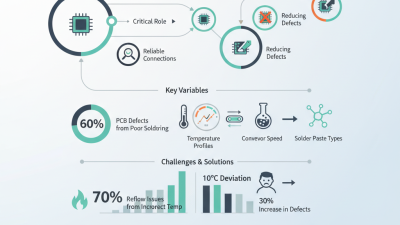
In the ever-evolving electronics manufacturing industry, the choice of a reliable Reflow Oven is crucial. A recent report by the International Electronics Manufacturing Initiative (iNEMI) highlights that nearly 50% of assembly defects stem from poor soldering processes. This statistic underscores the importance of selecting the right equipment. Industry expert Dr. Emily Chen states, “The efficiency of a Reflow Oven directly influences the quality of electronic assemblies.” Her insight reflects the critical role these ovens play in ensuring optimal solder joint formation.
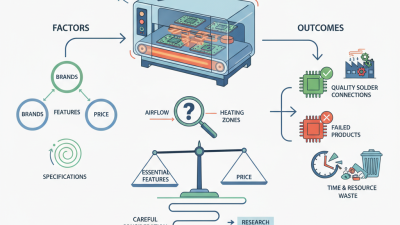
As we approach 2026, the demand for high-quality Reflow Ovens continues to rise among global buyers. Different models offer various features and specifications tailored to meet specific manufacturing needs. In a competitive market, understanding these options is essential for making informed purchases. The right Reflow Oven can enhance production efficiency while minimizing defects. However, not all models are created equal. Buyers must consider factors such as temperature uniformity and energy consumption.
Navigating through numerous brands and models can be overwhelming. As new technologies emerge, keeping up with trends is vital. The decision-making process may reveal gaps in understanding features or operational benefits. Thus, thorough research and expert advice become essential in selecting the best Reflow Oven for any production line.

2026 Reflow Oven Overview: Key Features and Innovations
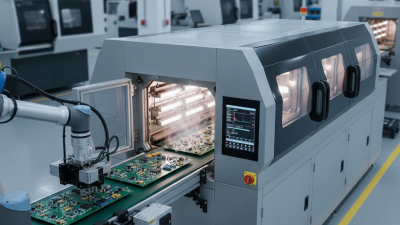
In 2026, the reflow oven market introduces exciting innovations. This year, energy efficiency takes center stage. Manufacturers are focusing on reducing power consumption while maintaining high performance. Many models now feature advanced temperature profiles, allowing for better control over the heating process. This is crucial for achieving optimal solder joint quality.
The design of reflow ovens has also evolved. Compact models are gaining popularity, suiting limited workspace environments. Improved tracking features support real-time monitoring of the soldering process. Users can identify issues quickly, reducing downtime. However, some issues remain. Not all models provide accurate feedback, leading to potential errors during production. It’s essential for buyers to examine customer feedback closely.
Integration with IoT technology offers additional benefits. Automated data collection streamlines production and ensures quality. Yet, not all manufacturers will embrace these technologies. Some may stick with traditional methods, causing a gap in overall efficiency. As various innovations emerge, users must carefully consider their specific needs. The right choice can greatly enhance production output.
2026 Best Reflow Oven Models Overview
Top Manufacturers of Reflow Ovens: A Comparative Analysis
When selecting a reflow oven, buyers face diverse options. Many manufacturers provide varying features and technologies. Understanding these differences is crucial for making an informed decision. Some brands focus on energy efficiency, while others emphasize advanced temperature control. Consider factors like speed and reliability when comparing products.
Product quality varies across models. Certain manufacturers are known for their innovative designs. However, some options might lack the durability expected. Researching user reviews can help identify these issues. Potential buyers should also consider after-sales support and service availability. This aspect is often overlooked but is vital for long-term operation.
Evaluating the safety features of reflow ovens is essential. Some models may not meet international safety standards. A lack of thorough testing could lead to hazardous situations. Look for certifications when assessing reliability. Adequate research can highlight critical differences among brands. Make your choice carefully to ensure optimal performance for your production needs.
2026 Best Reflow Oven Models for Global Buyers Guide
| Model |
Temperature Range (°C) |
Dimensions (L x W x H) |
Weight (kg) |
Throughput (PC/hr) |
Energy Consumption (kWh) |
| Model A |
210 - 250 |
1200 x 800 x 600 mm |
250 |
2000 |
8 |
| Model B |
220 - 260 |
1300 x 850 x 650 mm |
300 |
2500 |
10 |
| Model C |
200 - 240 |
1100 x 750 x 580 mm |
220 |
1800 |
7 |
| Model D |
230 - 270 |
1400 x 900 x 700 mm |
350 |
3000 |
12 |
| Model E |
210 - 250 |
1250 x 800 x 600 mm |
280 |
2100 |
9 |
Buying Considerations for Global Buyers: Factors to Evaluate
When selecting a reflow oven, global buyers should consider several crucial factors.
The size of the oven affects your production capacity.
A larger unit can manage higher volumes but requires more space. Think about your workspace and whether you can accommodate it.
Temperature control is another vital aspect. Precise temperature profiles ensure soldering quality.
Irregular heating patterns can cause defects. You want an oven with reliable feedback mechanisms.
A poorly calibrated oven hampers production efficiency.
**Tips:** Always check user reviews. Real experiences provide insight.
Consider energy consumption. Efficient models yield lower operational costs.
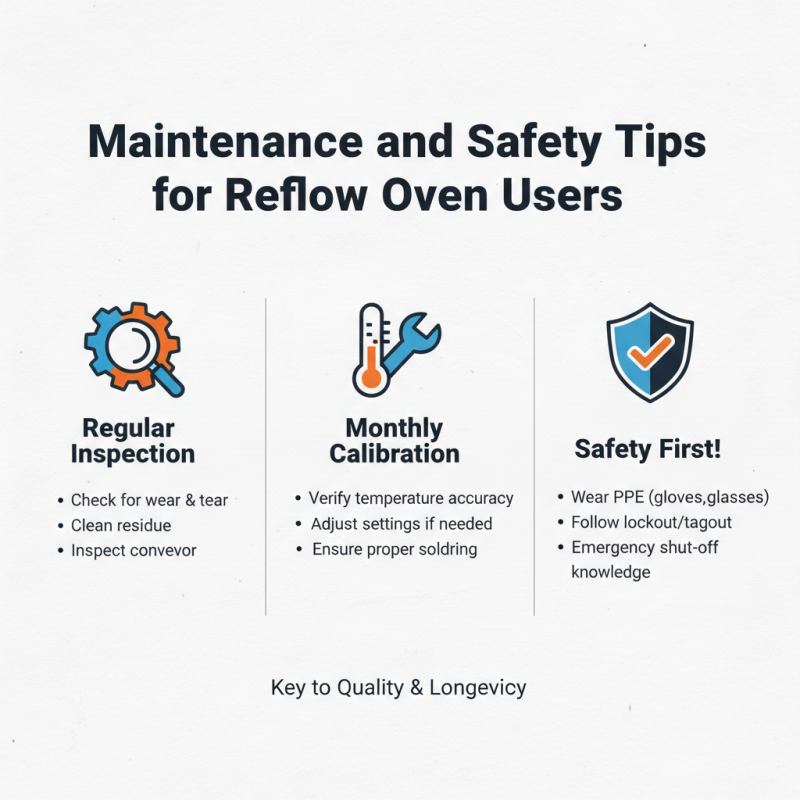
Examine the machine’s maintenance needs.
Ease of maintenance directly impacts your workflow. Investing time in research pays off in the long term.
Future Trends in Reflow Oven Technology: What to Expect
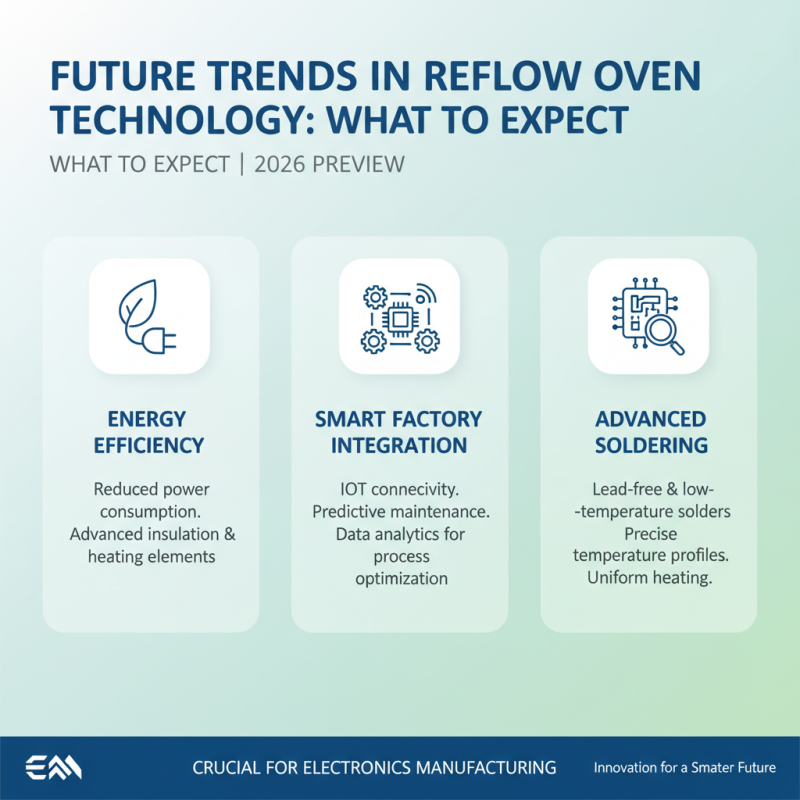
As the electronics manufacturing industry evolves, the technology behind reflow ovens continues to advance. Buyers in 2026 can expect shifts toward more energy-efficient models. These ovens are crucial for soldering components onto circuit boards. Energy consumption is a growing concern, pushing manufacturers to innovate.
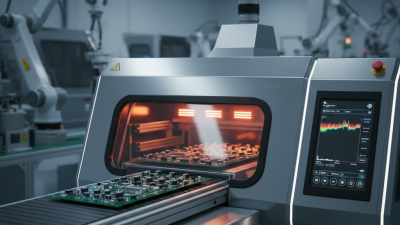
Temperature control technology is becoming more precise. Today's models may offer better uniformity in heat distribution. This ensures quality solder joints and reduced defects. However, users must remain cautious. Overheating can lead to component damage, and not all systems provide adequate feedback.
Integration with Industry 4.0 is another key trend. Smart ovens collect data for predictive maintenance. This minimizes downtime and enhances reliability. Yet, the complexity of such systems can be daunting. Users must be prepared to adapt to new interfaces and software challenges. Balancing automation with intuitive use will be essential for future buyers.