- Home
- Products
- News
- About Us
- Support center
- Blog
- Contact Us
inquiry
Leave Your Message
Choosing the right Smt Stencil Printer in 2026 requires more than comparing advertised speed. Global buyers must examine printing accuracy, paste consistency, setup time, service support, and total ownership cost. A machine may promise high throughput, yet perform poorly with fine-pitch components or changing board sizes.
This guide evaluates leading SMT stencil printers through practical purchasing criteria. It considers frame compatibility, squeegee pressure control, vision alignment, cleaning systems, and operator training. These details matter on a real production floor. A stable printer should handle repeated runs without excessive paste smearing, bridging, or manual adjustment. It should also provide clear operating data for quality audits and process improvement.
Look beyond the brochure.
Reliable selection depends on evidence from factory trials, verified specifications, and feedback from experienced users. Buyers should request sample printing with their own stencil, solder paste, and PCB designs. Supplier reputation also matters, especially when spare parts cross borders and technical support spans time zones. Regional voltage, language, installation standards, and maintenance response times deserve careful review.
No single model fits every factory. Some recommendations may change after testing humidity, board warpage, or difficult apertures. That uncertainty is important. A lower-priced printer could become expensive when alignment errors increase rework. Conversely, premium automation may exceed the needs of a small production line. By comparing measurable performance with practical operating conditions, buyers can identify a Smt Stencil Printer that supports dependable quality, realistic productivity, and long-term manufacturing growth.
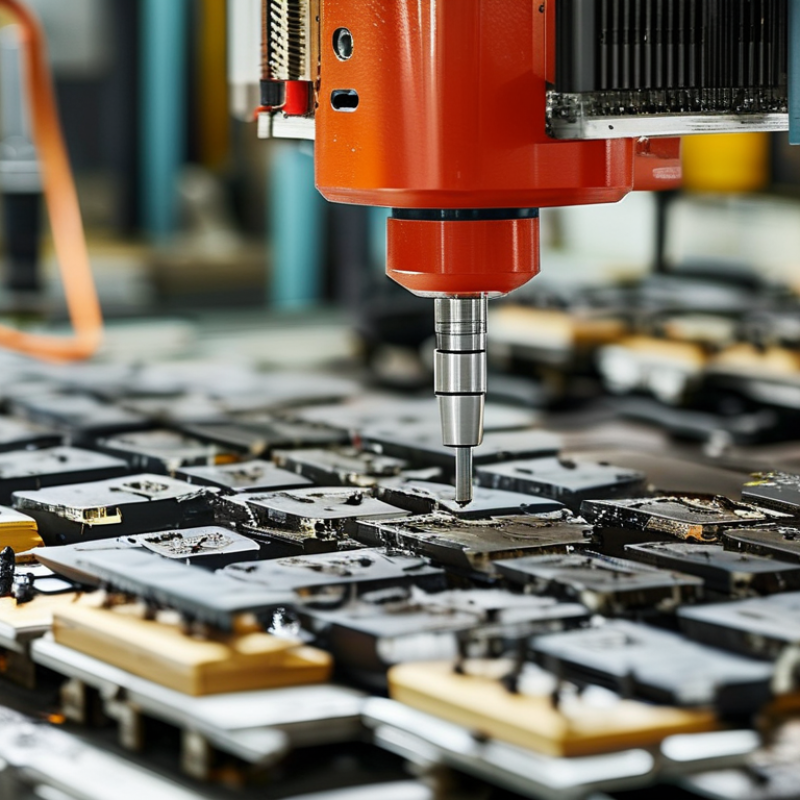
SMT stencil printing transfers solder paste through laser-cut apertures onto a bare circuit board. The printer aligns the stencil, board, and fiducial marks before squeegee movement begins. Its core functions include board clamping, stencil support, paste dispensing, pressure control, and automatic cleaning. A stable print needs controlled speed and pressure. Small changes matter.
Research and Markets estimates that the global SMT equipment market may grow from about US$4.5 billion in 2024 to US$6.8 billion by 2029. This growth reflects higher assembly complexity and tighter process control. For global buyers, repeatability matters more than impressive speed alone. Modern systems often use vision alignment, closed-loop squeegee control, and programmable separation distance. These features help reduce bridging, insufficient deposits, and paste smearing.
Printing quality should be checked with solder paste inspection after each trial setup. IPC process guidance commonly links reliable joints with consistent paste volume, alignment, and aperture design. Yet the printer cannot correct every design weakness. Poor board support still causes defects. Excess paste on the stencil can also distort deposits. In practice, operators should record pressure, speed, cleaning intervals, and paste age. The overlooked detail is maintenance. A highly automated printer still needs disciplined judgment, and my view is imperfect: published market forecasts describe demand, not guaranteed production results.
SMT Stencil Printer Basics and Core Printing Functions
| Printer Category | Typical Production Use | Typical Throughput | PCB Size Capability | Stencil Alignment | Typical Print Repeatability | Core Printing Functions | Best Buyer Profile |
|---|---|---|---|---|---|---|---|
| Manual Stencil Printer | Prototyping, laboratories, repair work and low-volume assembly | Approximately 5–20 boards per hour, depending on operator skill | Commonly small and medium-format PCBs; exact range depends on the frame | Manual fiducial or board adjustment | Typically about ±0.05–0.15 mm under suitable operating conditions | Stencil positioning, paste application, squeegee travel and manual release | R&D teams, schools, service centers and low-volume workshops |
| Semi-Automatic Stencil Printer | Small-batch production with improved process consistency | Approximately 20–60 boards per hour | Small to medium PCBs; larger formats are available in selected configurations | Manual or assisted X-Y-θ alignment | Typically about ±0.03–0.10 mm | Programmable squeegee movement, controlled print pressure and adjustable separation | Contract manufacturers and manufacturers with flexible product mixes |
| Automatic Stencil Printer | Medium- and high-volume SMT production lines | Approximately 60–150 boards per hour, depending on board size and cycle settings | Usually supports standard and large-format SMT boards | Automatic optical or vision-assisted fiducial alignment | Typically about ±0.02–0.05 mm | Automatic board loading, vision alignment, paste dispensing, print stroke control and board release | Production facilities requiring repeatable output and line integration |
| High-Precision Fine-Pitch Printer | Fine-pitch, micro-BGA, QFN, CSP and densely populated assemblies | Approximately 50–120 boards per hour, depending on inspection and alignment cycles | Standard and specialized PCB formats with stable mechanical support | High-resolution camera alignment with automatic correction | Typically about ±0.01–0.03 mm under controlled conditions | Closed-loop alignment, programmable pressure, controlled paste release and multi-point support | Electronics manufacturers focused on miniaturization and first-pass yield |
| Large-Format Stencil Printer | LED boards, industrial controllers, power electronics and large assemblies | Approximately 30–100 boards per hour, based on board dimensions and handling time | Designed for extended board lengths and widths; specification must be confirmed per machine | Manual, assisted or automatic alignment | Typically about ±0.03–0.08 mm | Large-board support, adjustable tooling, stencil clamping and programmable print parameters | Industrial and power-electronics producers with oversized PCB requirements |
| Inline Stencil Printer | Continuous SMT lines with automated material handling | Approximately 60–150 boards per hour, depending on line takt time | Usually supports standard conveyor-compatible PCB sizes | Automatic vision-based alignment | Typically about ±0.02–0.05 mm | Automatic loading and unloading, conveyor transfer, fiducial recognition, print control and recipe management | High-volume factories seeking automation and reduced operator handling |