2026 Top Reflow Machine Innovations and Trends to Watch Out For?
As the electronics manufacturing industry evolves, 2026 will showcase significant innovations in Reflow Machines. According to a report by MarketWatch, the global market for reflow soldering equipment is projected to reach $1.2 billion by 2026, driven by advancements in technology and increasing demand for high-quality electronic components. Expert Dr. Ethan Lin states, "Reflow Machines are not just tools; they are the backbone of modern electronics assembly."
The upcoming 139th China Import and Export Fair will highlight such innovations, emphasizing advanced manufacturing across various sectors. Notably, AI technologies have entered this space, enhancing operational efficiency and precision. With AI-driven features, procurement processes will transform, enabling buyers to identify qualified suppliers rapidly.
However, challenges remain. Manufacturers must adapt to the increasing complexity of electronic designs while ensuring quality standards. The Reflow Machine sector must also address issues such as energy consumption and waste. Balancing innovation with sustainability will be critical as the industry approaches 2026.
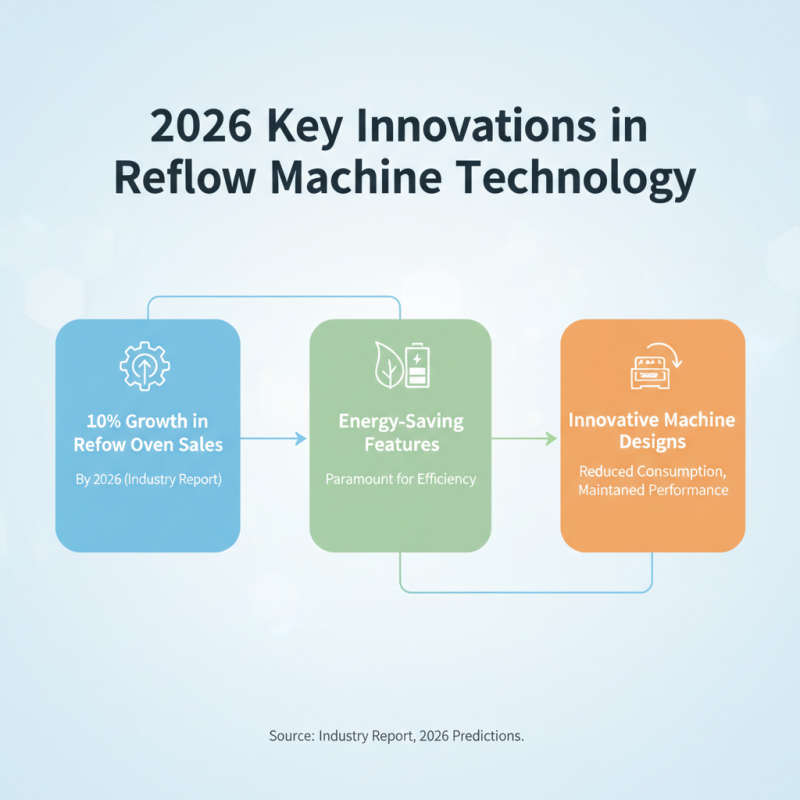
2026 Key Innovations in Reflow Machine Technology
The reflow machine technology landscape is evolving rapidly. A recent industry report predicts a 10% growth in reflow oven sales by 2026. As manufacturers aim for higher production efficiency, energy-saving features will become paramount. Innovations in machine designs are focusing on reducing energy consumption without sacrificing performance.
Adoption of advanced sensors is also a key trend. These sensors help monitor temperature profiles more accurately, leading to improved soldering results. A study highlighted that machines with real-time monitoring can enhance production yield by up to 15%. However, integrating these sensors poses challenges. There’s a need for further training for operators, which can slow down initial implementation.
Additionally, eco-friendly materials are gaining traction. The shift towards sustainable practices is reshaping production methods. Many companies are exploring alternatives to traditional solder paste. This transition can present hurdles, as not all materials perform equally well. Disruptions in supply chains may also occur during this transition, impacting timelines and costs.
Emerging Trends in Automation for Reflow Soldering Processes
The reflow soldering process is rapidly evolving. Automation is driving significant changes in this area. Manufacturers are increasingly adopting advanced technologies to enhance efficiency. Robotics and AI play a vital role here. They can optimize workflows and reduce human error.
Emerging trends show that intelligent systems are gaining traction. These systems can analyze data in real time. They adjust parameters for better precision. This leads to improved soldering quality, but it's not always flawless. Some systems struggle to adapt to unexpected variations. Continuous monitoring is crucial, yet many still overlook this aspect.
Integrating automation requires careful planning. It involves training staff and maintaining equipment. The shift may introduce some challenges and learning curves. Organizations must be prepared to adapt. Embracing these innovations can lead to transformative results in reflow processes. However, it's important to address potential pitfalls. Balancing technology with practical experience is essential for success.
2026 Top Reflow Machine Innovations and Trends
This chart illustrates the projected adoption rates of several innovations in reflow soldering processes for 2026. Key trends include the increasing integration of automation, improved temperature control, advanced soldering materials, and real-time monitoring systems.
Impact of IoT Integration on Reflow Machine Efficiency
The integration of the Internet of Things (IoT) is transforming reflow machines. Smart sensors in these machines collect real-time data. This information helps operations run smoothly and improves efficiency significantly. With IoT, manufacturers can monitor equipment health easily. They can predict failures before they happen. This predictive maintenance reduces downtime.
**Tip:** Regularly analyze data from machines. Identify patterns that lead to breakdowns. Adjust maintenance schedules accordingly.
IoT also allows remote monitoring. Engineers can troubleshoot machines from anywhere. This saves time and speeds up problem resolution. However, the initial setup for IoT can be complex. It may require significant investment and training. Manufacturers need to weigh these factors.
**Tip:** Invest in training for your team. A knowledgeable workforce makes better use of technology. Emphasize the importance of data analysis in daily operations.
Advancements in Thermal Management Solutions for Reflow Systems
In the realm of reflow soldering, thermal management is evolving rapidly. This area is crucial for improving efficiency and product quality. Increasing demands for precision mean manufacturers must adapt. The latest trend involves advanced thermal control systems. These systems monitor temperatures in real-time. This ensures critical components achieve the right temperatures without overheating.
Additionally, some innovations focus on energy efficiency. New thermal sensors can reduce power consumption significantly. They use algorithms to optimize heating zones. This helps save costs over time. Implementing these solutions, however, can be tricky. Some companies struggle to integrate new technologies into existing setups. The balance between innovation and practicality is delicate.
Moreover, cooling techniques are becoming more sophisticated. Innovations in cooling fans and heat exchangers enable quicker temperature returns. Nevertheless, there’s room for improvement. Manufacturers need to assess the long-term durability of these new components. Overall, the push for enhanced thermal management solutions continues. Success depends on both adaptation and reflection on past practices.
2026 Top Reflow Machine Innovations and Trends to Watch Out For
| Innovation/Trend |
Description |
Impact |
Projected Adoption Year |
| Advanced Thermal Control Systems |
Next-generation systems providing real-time temperature monitoring and adjustment. |
Increased precision in soldering processes, reducing defects. |
2026 |
| Eco-Friendly Soldering Solutions |
Innovations focused on lead-free and environmentally friendly materials. |
Meeting regulatory standards and enhancing sustainability. |
2026 |
| AI and Machine Learning Integration |
Utilizing AI for predictive maintenance and process optimization. |
Reduction in downtime and enhanced production efficiency. |
2026 |
| Modular Reflow Systems |
Flexible reflow machinery that can be customized based on production needs. |
Enhanced adaptability for varying production scales. |
2026 |
| Improved Energy Efficiency |
Energy-saving technologies aimed at reducing consumption in reflow ovens. |
Lower operational costs and smaller carbon footprint. |
2026 |
Sustainability Trends in Reflow Machine Design and Operation
Sustainability is becoming a key focus in reflow machine design and operation. With a growing emphasis on reducing energy consumption, manufacturers are seeking innovative solutions. According to industry reports, around 30% of energy used in electronics manufacturing comes from machines like reflow ovens. This number is pushing companies to adopt greener practices.
One interesting innovation is the use of advanced insulation materials and heat recovery systems. These changes can lower energy usage by up to 25%. However, not all companies are prepared for these shifts. While the technology exists, some manufacturers hesitate to invest. This reluctance can be a barrier to adopting more sustainable processes.
Tips: Consider evaluating your current energy consumption data. Identify areas for improvement before upgrading your equipment. Small changes can lead to significant energy savings and lower operational costs.
Another trend involves the use of eco-friendly materials in the manufacturing process. Using materials that emit fewer volatile organic compounds (VOCs) can enhance workplace safety. However, some professionals still struggle to fully transition to these materials, citing budget constraints and limited access to alternatives. Finding a balance between cost and sustainability remains a challenge.