2026 How to Choose the Best Smt Pick And Place Equipment?
In the world of electronics manufacturing, choosing the right SMT pick and place equipment is crucial. This equipment directly affects production efficiency and product quality. An appropriate selection can streamline operations and enhance precision.
Factors to consider include machine specifications, such as speed and accuracy. It’s essential to evaluate the equipment based on your specific production needs. Not all machines fit every purpose. Additionally, durability is a key aspect. A reliable machine minimizes downtime and repair costs.
Understanding the latest technology trends also adds value. Some machines come with advanced features, yet they might require complex operations. Balancing between technology and ease of use is vital. Investing time in research will lead to better decisions in selecting SMT pick and place equipment.
Factors to Consider When Choosing SMT Pick and Place Equipment
When selecting SMT pick and place equipment, several factors require careful consideration. Precision is paramount; research shows that machines with a placement accuracy of ±25 microns can significantly enhance production quality. Speed is another critical element. The latest data indicates that systems capable of 20,000 cph (components per hour) are becoming industry standards, crucial for high-demand environments.
Flexibility also plays a vital role in the decision-making process. Equipment should handle various component sizes and types. Many manufacturers now target multi-component placements. This capacity can boost productivity while reducing overhead costs. Assessing the software integration is essential, too. User-friendly interfaces can decrease training time, making onboarding smoother.
However, buyers must reflect on their actual needs. Some opt for lower-end models, assuming cost savings lead to better ROI. This can be misleading, as shortcomings in precision or speed may ultimately offset initial savings. Investing in reliable, high-performance machines pays off in the long run. Always consider the long-term implications of your choices. Understanding your production requirements will guide you in making informed decisions.
Types of SMT Pick and Place Machines Available in the Market
When selecting SMT pick and place machines, understanding the different types available is crucial. These machines vary in speed, precision, and features, catering to various production needs. For instance, traditional automatic pick and place machines are great for larger production runs. They offer high-speed placing, but may lack flexibility for smaller batches.
On the other hand, benchtop machines are more compact and versatile. They are ideal for small to medium productions. Their affordability makes them accessible for startups. However, they might not match the throughput of larger machines. Each type has its advantages and drawbacks.
Inline systems provide efficiency for high-volume assembly lines. They often integrate with other automated services, but their high cost may not suit every budget. Understanding these nuances is essential. It helps businesses make informed decisions that align with their specific requirements and production goals. Choosing the right machine could significantly impact overall productivity. Each option has considerations that merit careful evaluation.
Key Features and Specifications to Look for in SMT Equipment
When selecting SMT pick and place equipment, key features significantly impact performance. Precision is crucial. Look for machines with high placement accuracy, ideally within micrometers. The ability to handle various component sizes matters too. A versatile machine simplifies the setup process for different jobs.
Another important factor is the speed of operation. Equipment that can place components rapidly enhances productivity. However, be wary of machines that prioritize speed at the expense of accuracy. It's essential to strike a balance. Additionally, consider the software capabilities. Intuitive software can streamline setup and maintenance, reducing downtime.
Incorporating these features will improve operational efficiency. Yet, reflect on your specific production needs. Not every machine suits every environment. Assess your future growth. Some options may need additional upgrades for future demands. Finding the right fit takes research and careful deliberation. Use reliable sources to guide your decision.
2026 SMT Pick And Place Equipment: Key Features Comparison
Budgeting and Cost Considerations for SMT Pick and Place Machines
Budgeting for SMT pick and place machines can be complex. The equipment cost ranges widely. A study indicated that most small to medium enterprises allocate about $50,000 to $150,000. Many firms struggle to find the right balance in performance and price. A low-cost machine may lack features, causing issues in the assembly line.
Operating costs add another layer to budgeting. Maintenance, training, and software updates can inflate expenses. Reports show that companies spend 15% to 20% of the initial machine cost annually for upkeep and improvements. It's vital to consider these factors. A cheaper machine may lead to increased long-term costs, impacting profitability.
Choosing the right machine isn't just about upfront costs. Consider the total cost of ownership. Some users notice that lower-priced options can slow down production, affecting delivery times. Conducting a thorough cost analysis is crucial. Gathering real-world data from other businesses can help in making a more informed decision.
2026 How to Choose the Best Smt Pick And Place Equipment? - Budgeting and Cost Considerations for SMT Pick and Place Machines
| Feature |
Description |
Cost Range |
Considerations |
| Placement Speed |
Number of components placed per hour |
$20,000 - $100,000 |
Higher speed increases productivity |
| Accuracy |
Precision of component placement |
$30,000 - $120,000 |
Critical for small SMT components |
| Feeder Capacity |
Number of different component reels that can be loaded |
$25,000 - $80,000 |
Greater capacity allows for fewer setups |
| Software Capability |
Features like design integration and programming |
$15,000 - $50,000 |
Ease of use can impact operational efficiency |
| Maintenance Costs |
Annual expenses for service and repairs |
$5,000 - $20,000 |
Consider long-term operational costs |
Maintenance and Support Options for SMT Manufacturing Equipment
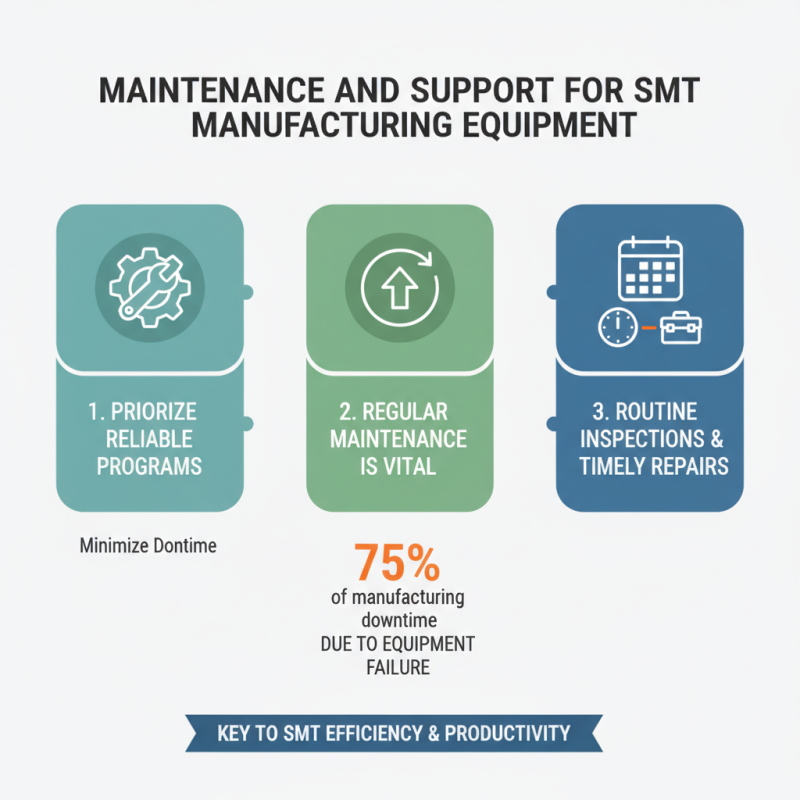
When selecting SMT pick and place equipment, maintenance and support options play a crucial role in ensuring efficiency. Regular maintenance is vital. A recent report indicates that 75% of manufacturing downtime is due to equipment failure. To minimize this, manufacturers must prioritize reliable maintenance programs. This includes routine inspections and timely repairs.
Support options also enhance equipment performance. Manufacturers should consider suppliers that offer 24/7 technical support. This can drastically reduce response time during equipment malfunctions. In a survey, 62% of SMT manufacturers stated that access to expert guidance improved their operational efficiency.
Investing in training for operators can further minimize errors. The learning curve in handling sophisticated SMT equipment can be steep. Effective training programs help new users avoid common pitfalls. Transitioning to automation, while beneficial, requires thoughtful integration. A lack of understanding can lead to expensive mistakes and reduced productivity.