How to Choose the Best Fuji Smt Machine for Your Business?
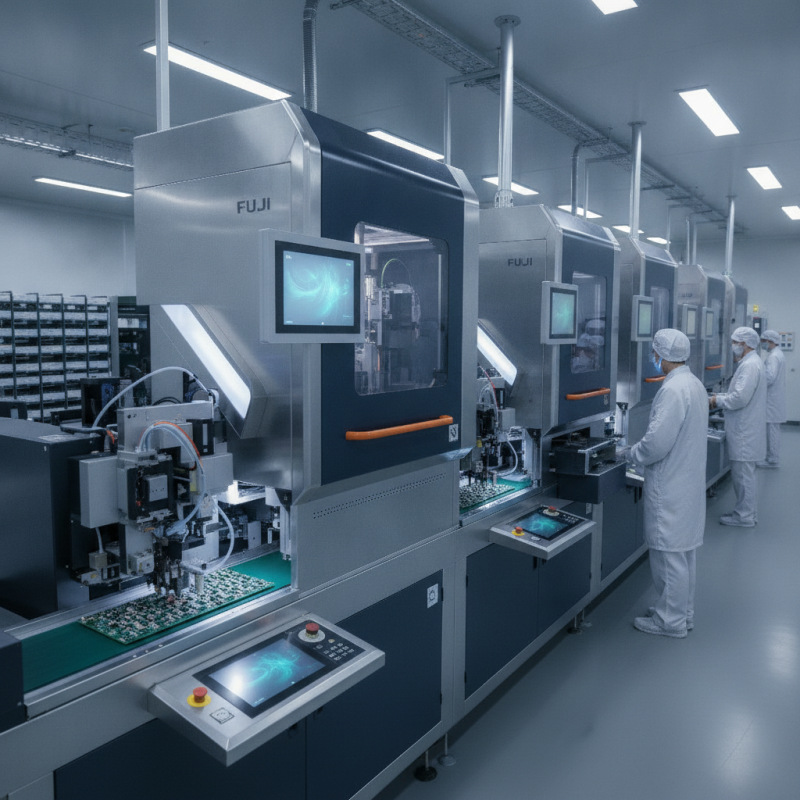
Choosing the right Fuji Smt machine can significantly impact your production efficiency. As businesses evolve, so do their needs for surface mount technology. The right machine not only enhances precision but also boosts productivity.
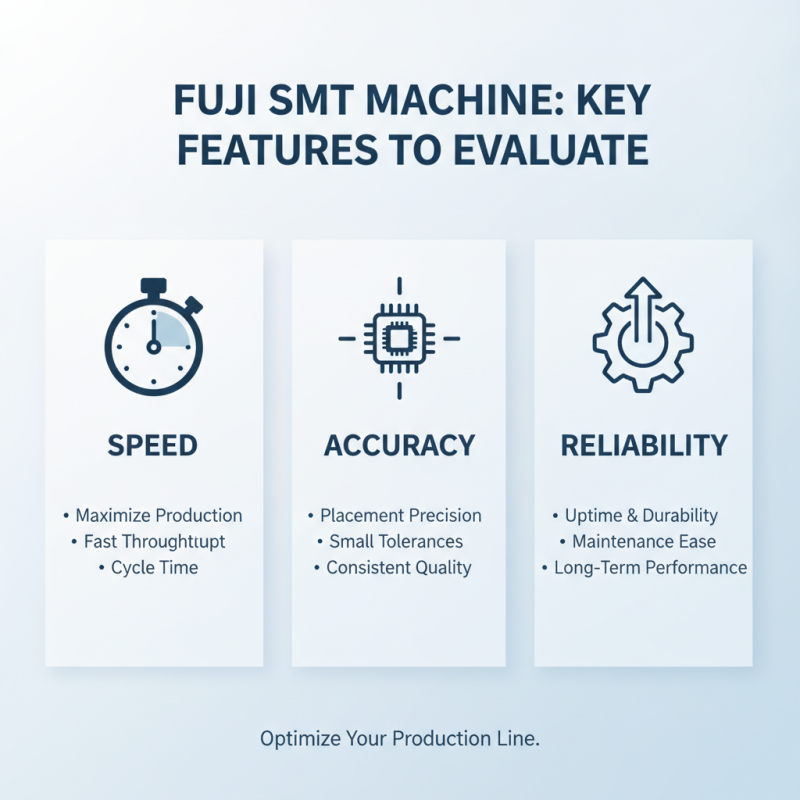
Understanding the features of different Fuji Smt machines is crucial. You might wonder about speed, reliability, or support. Each machine comes with its strengths and weaknesses. Finding the perfect match for your specific requirements requires careful consideration.
Investing in a Fuji Smt machine is a critical decision. It involves assessing not just price, but also long-term benefits and support. The machine you choose reflects your commitment to quality and innovation. Make your choice wisely, and it can lead to remarkable improvements in your operations.
Understanding Fuji SMT Machines: Types and Specifications
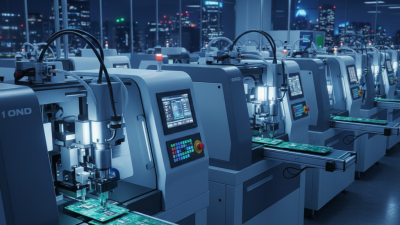
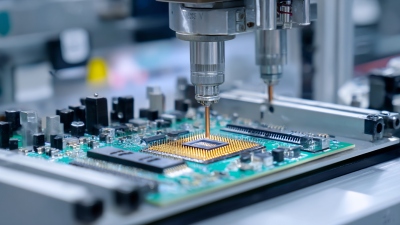
Understanding the various types and specifications of Fuji SMT machines is crucial for businesses. These machines play a significant role in surface mount technology, helping automate the assembly process. Key specifications often include placement speed, accuracy, and the capability to handle various substrates. It’s essential to match these specifications with your production needs.
Consider the types of Fuji SMT machines available. There are entry-level options suited for small-scale operations and high-end models for large manufacturers. Entry-level machines are usually easier to operate but may lack advanced features. The high-end options, though more complex, offer exceptional speed and precision. You might find that a more affordable machine meets your needs. Still, investing in a high-performance model could enhance efficiency significantly.
However, choosing the right machine means evaluating long-term benefits versus initial costs. An underperforming machine can lead to increased downtime and higher maintenance costs. It’s necessary to reflect on your production goals and consider future scalability. Understanding these factors will ultimately guide you toward making an informed choice.
Assessing Production Speed and Efficiency Metrics in SMT Machines
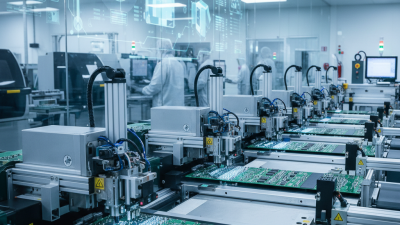
When selecting a Fuji SMT machine, assessing production speed and efficiency is crucial. High-speed machines can significantly enhance throughput. According to industry reports, advanced SMT equipment achieves speeds up to 100,000 components per hour. However, this output requires careful balancing of various factors. Quality control is paramount; faster machines can sometimes sacrifice accuracy. This trade-off must be evaluated for each specific operation.
Efficiency metrics should also include the machine’s setup time and adaptability. A well-designed machine enables rapid changeovers, reducing down time. Data suggests that a reduction in setup time can lead to a 15% increase in overall efficiency. Regular maintenance is necessary to sustain performance, yet it is often overlooked. Ignoring maintenance can lead to unplanned downtimes, which directly impact productivity.
Finally, consider the total operational costs. It's not just about initial investments. Operating expenses, including training and upkeep, add to the overall cost. An efficient machine might be more expensive upfront, but it often yields better returns over time. Investing in a high-quality machine can generate steady output and maintain reliability in production.
Production Speed and Efficiency of SMT Machines
Cost-Benefit Analysis: Pricing vs. Performance of Fuji SMT Equipment
When selecting SMT equipment for your business, cost and performance are crucial factors. According to industry reports, the initial cost of Fuji SMT machines can vary significantly, ranging from $50,000 to over $1 million. This price disparity often reflects the machine’s capabilities and technology. Businesses must assess whether they need high-speed production or flexibility in handling diverse components.
Performance data shows that machines with advanced placement accuracy can reduce defect rates by up to 30%. Yet, this enhancement might come at a premium price. Companies sometimes undervalue the long-term savings from fewer reworks and returns. In contrast, lower-priced machines may require frequent maintenance, driving up overall costs over time.
Investing in staff training is essential. An efficient machine in the hands of untrained operators won’t yield the desired outcomes. Reports indicate that businesses that allocate resources to training see productivity increases of up to 25%. However, balancing equipment investments and employee development can be challenging. Many firms grapple with this as they strive for sustainability and growth.
Industry Trends: Future-Proofing Your SMT Investment with Fuji Machines
The landscape of surface mount technology (SMT) is evolving rapidly. Businesses need to stay ahead of these trends to ensure their investments are future-proof. Industry reports suggest that the global SMT market is expected to reach $8 billion by 2027. This growth is driven by increasing demand for miniaturized electronics and higher production efficiency. Choosing the right machine is pivotal for success.
When selecting an SMT machine, consider automation features. Automation can enhance productivity and reduce labor costs. Reports indicate that companies adopting automated processes see a 30% increase in output. Moreover, integrating AI and machine learning can optimize production speeds. This offers agility to adapt to changing market needs.
**Tips**: Regularly assess your production needs. Stay updated on the latest technological advancements. Evaluate the scalability of machines to prepare for future demands. If a machine cannot accommodate growth, it may require replacement sooner than expected. Future-proofing your investment means addressing both current and projected requirements.
How to Choose the Best Fuji Smt Machine for Your Business?
| Model |
Placement Speed (CPH) |
Max Component Size (mm) |
Board Size (mm) |
Number of Feeder Slots |
Price (USD) |
| SMT-X100 |
8000 |
50 |
450 x 350 |
16 |
35,000 |
| SMT-Y200 |
9000 |
60 |
500 x 400 |
20 |
40,000 |
| SMT-Z300 |
10000 |
75 |
600 x 500 |
24 |
60,000 |
| SMT-Q400 |
12000 |
80 |
550 x 450 |
22 |
70,000 |