Top 5 Pcb X Ray Machine for Quality Assurance?
In the fast-evolving electronics industry, ensuring product quality is paramount. Dr. Emily Chen, a leading expert in PCB X Ray Machine technology, states, “The precision of X-ray inspection can make or break product reliability.” This statement highlights the critical role that PCB X Ray Machines play in modern manufacturing. As electronic devices become increasingly complex, quality assurance processes must adapt.
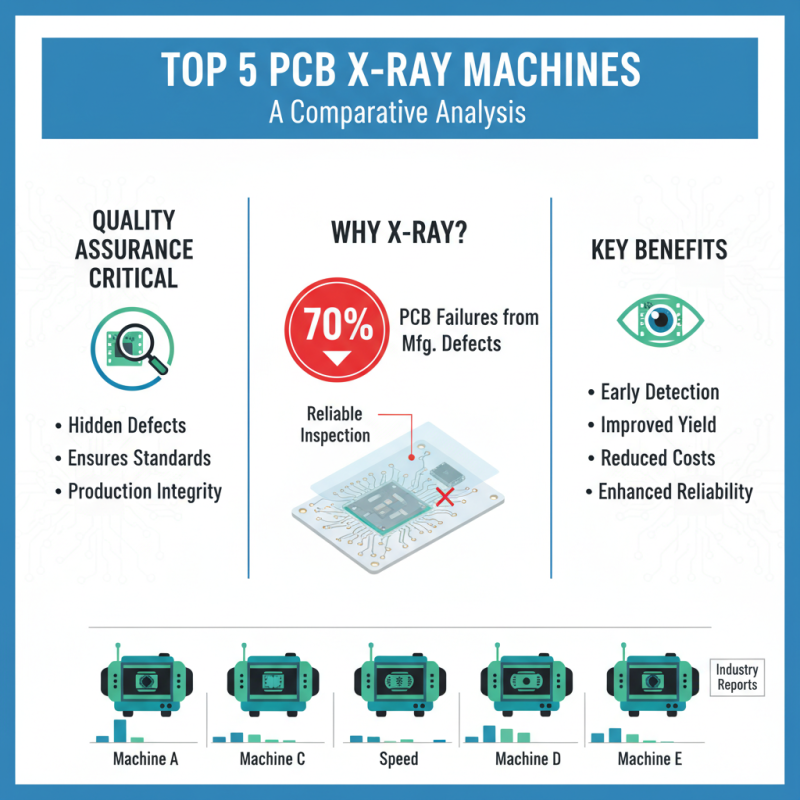
The PCB X Ray Machine serves as a vital tool in detecting hidden defects within circuit boards. These machines provide detailed images, revealing issues that traditional inspection methods may miss. For example, they can identify voids in solder joints, which can lead to failure in electronic devices. This capability is essential in maintaining the standards expected by consumers.
However, not all PCB X Ray Machines are created equal. Companies often struggle to choose the right machine that meets their specific needs. Factors such as resolution, speed, and cost must all be considered. A poorly chosen machine can result in wasted resources and unaddressed quality issues. Therefore, making an informed choice is crucial for any manufacturer that values reliability and performance.
Overview of PCB X-Ray Machines and Their Importance in Quality Assurance
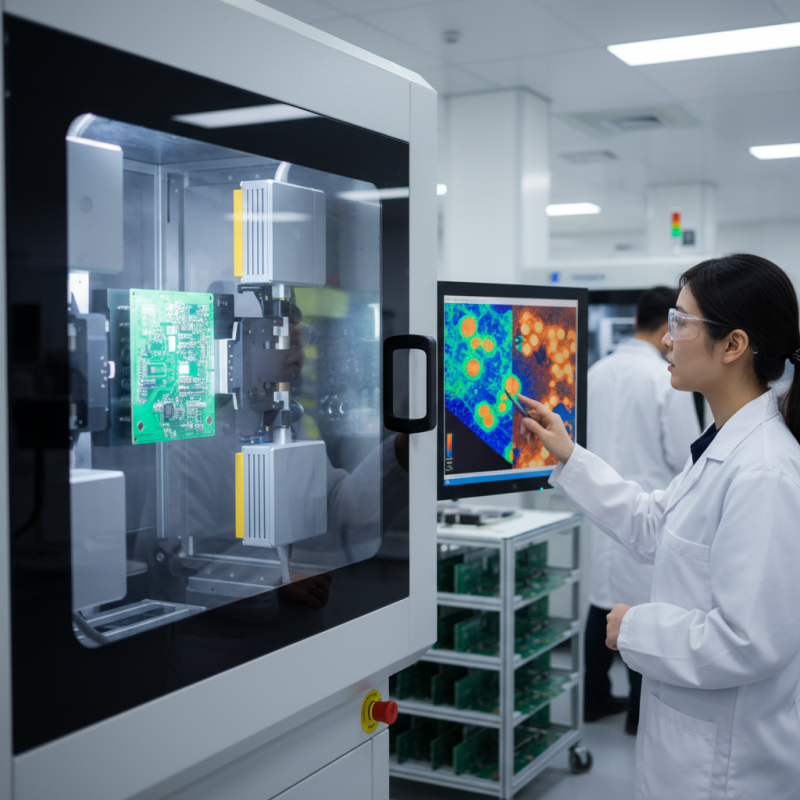
PCB X-ray machines play a pivotal role in the realm of quality assurance. These sophisticated devices allow manufacturers to inspect printed circuit boards (PCBs) for defects that are often invisible to the naked eye. X-ray inspection can reveal internal layer connections, hidden solder joints, and other anomalies that may lead to product failure.
According to a recent industry report, about 30% of PCB defects originate from hidden electrical connections. Without the use of X-ray technology, these defects could go undetected, potentially resulting in costly recalls.
The increasing complexity of PCB designs further emphasizes the importance of X-ray inspection. A study indicated that nearly 20% of PCBs are failing due to manufacturing defects, many of which can be identified through X-ray analysis. This highlights the necessity for rigorous quality control processes. While X-ray machines enhance reliability, they are not infallible. Operators must be well-trained and vigilant to interpret the images accurately; misinterpretation can lead to overlooking critical faults. Therefore, continuous education and advanced training are vital to leveraging the full potential of these machines in quality assurance.
Key Features to Look for in a High-Quality PCB X-Ray Machine
When selecting a high-quality PCB X-ray machine, certain key features are critical. Precision and resolution are paramount. A machine should deliver detailed images to identify defects like voids, cracks, or improper soldering. Studies show that systems with a detection resolution of 5 μm significantly improve defect identification rates.
Speed of the scanning process is also vital. In an industry where time is money, faster inspection reduces production bottlenecks. Machines that offer real-time imaging capabilities allow quicker decision-making. For example, data indicates that utilizing such systems can reduce inspection times by up to 40%. This efficiency leads to increased overall productivity.
Software integration plays a significant role too. Look for machines with advanced software that allows for easy analysis of the X-ray data. User-friendly interfaces improve operator efficiency. However, training on complex software can present challenges, potentially leading to errors in interpretation. Regularly revisiting software updates and user training can mitigate these issues, enhancing the machine's effectiveness in ensuring quality assurance.
Top 5 PCB X-Ray Machines for Quality Assurance
This chart illustrates the comparison of key features among the top 5 PCB X-Ray machines available for quality assurance. It displays the resolution in micrometers and the price in USD, helping users assess the trade-offs between performance and cost.
Applications of PCB X-Ray Technology in Various Industries
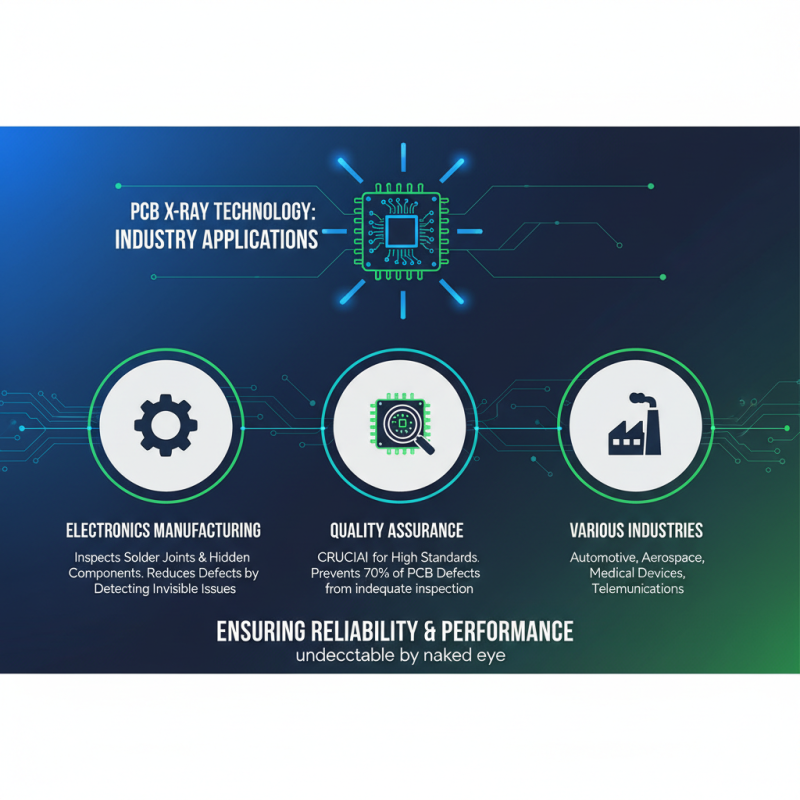
PCB X-ray technology plays a crucial role in various industries, ensuring the highest quality standards. In electronics manufacturing, for instance, it is essential for inspecting solder joints and hidden components. Studies reveal that nearly 70% of all PCB defects arise from inadequate inspection processes. By utilizing X-ray systems, manufacturers can detect issues invisible to the naked eye, significantly reducing failure rates.
The automotive industry increasingly adopts PCB X-ray technology. With 78% of modern vehicles relying on electronic systems, detecting faults early is non-negotiable. X-ray inspections enable manufacturers to ensure reliable performance in critical applications like safety mechanisms. However, challenges remain. Operators must be trained effectively to interpret X-ray images correctly, as misdiagnoses can occur, leading to costly recalls.
In the medical device sector, precision is paramount. A recent report indicated that 90% of medical devices incorporate PCBs. Any defects can have serious repercussions. X-ray inspections guarantee that these devices meet stringent safety standards. Nonetheless, as technology evolves, so does the complexity of PCBs. Continuous investment in training and technology will be necessary to keep pace with the industry's demands.
Future Trends in PCB X-Ray Technology for Enhanced Quality Assurance
Future trends in PCB X-ray technology are set to transform quality assurance in the electronics industry. As devices become smaller and more complex, the need for advanced inspection methods becomes critical. High-resolution imaging systems are evolving rapidly, offering better detection of defects in densely packed PCBs. This advancement not only enhances defect identification but also reduces inspection times.
AI integration is another significant trend. Machine learning algorithms can analyze vast amounts of data from X-ray scans. They can detect patterns that might escape human observation. This capability not only improves accuracy but also enhances efficiency in the quality assurance process. However, the reliance on technology raises concerns. Will we overlook human judgment in decision-making? Finding a balance is essential.
Collaboration among manufacturers, engineers, and quality assurance experts will drive these innovations. Industry partnerships can lead to better tools and methodologies. The future of PCB X-ray technology will require a shift in mindset, embracing both machine and human insights. Adapting to these changes will be key to maintaining high-quality standards in an ever-evolving market.