What is a Pcb Pick And Place Machine and How Does It Work?
In the world of electronics manufacturing, the Pcb Pick And Place Machine plays a crucial role. This machine automates the placement of electronic components onto printed circuit boards, streamlining production processes. John Smith, an industry expert with over 15 years of experience, once said, “The efficiency of a Pcb Pick And Place Machine can significantly reduce production time and costs.”
With advanced technology, these machines can place thousands of components in just a few hours. Their precision minimizes errors and enhances product quality. However, reliance on automation can lead manufacturers to overlook the importance of skilled operators.
As production systems advance, the capabilities of Pcb Pick And Place Machines continue to grow. Yet, it's vital to remain aware of the potential pitfalls. Regular maintenance and updates are necessary to ensure optimal performance. Balancing automation with human oversight can yield the best results in today’s fast-paced market.
What is a PCB Pick and Place Machine?
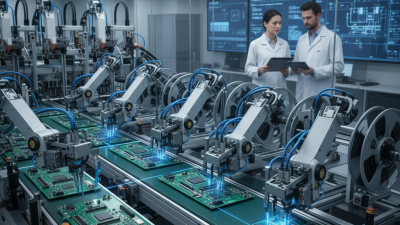
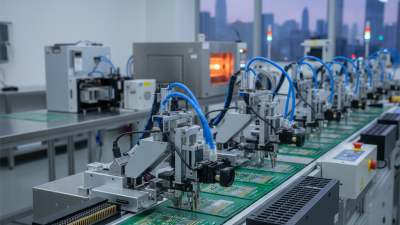
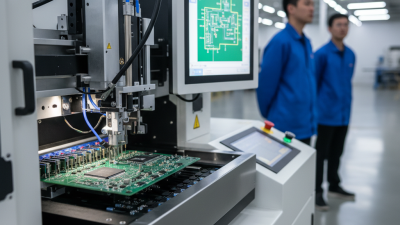
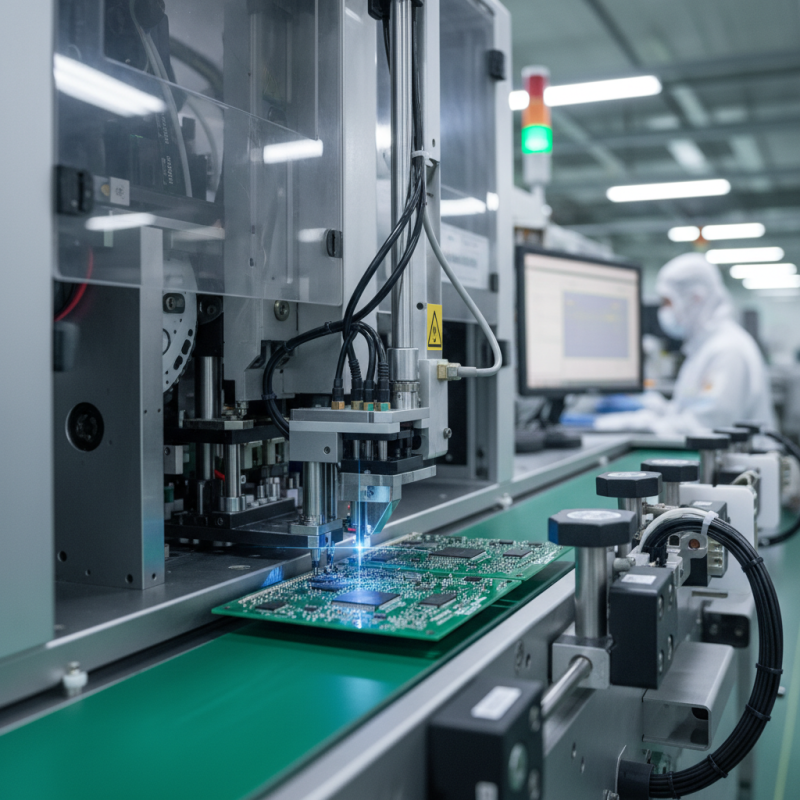
A PCB pick and place machine is an essential tool in electronics manufacturing. It automates the process of placing components onto printed circuit boards (PCBs). These machines are equipped with robotic arms and vision systems that ensure precision. The ability to handle tiny components with high accuracy makes them invaluable. Operators often program them to execute specific patterns and placements.
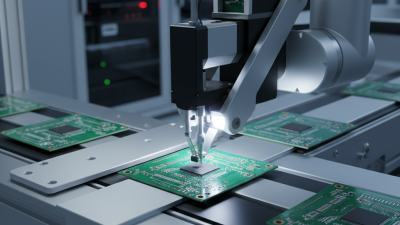
The mechanics behind a pick and place machine involve feeding components from reels or trays. The machine identifies the correct position on the PCB using its cameras. Once aligned, it picks up the component and places it on the board. This process not only speeds production but reduces human error. It's fascinating to see how technology drives efficiency in manufacturing.
Adjusting to the complexities of different PCBs can be challenging. Some designs may require fine-tuning of the machine's settings. Operators need to be skilled to handle these adjustments. Such moments reveal the human aspect amidst technological advancement. Reflecting on these challenges helps improve processes and outcomes in the long run.
What is a PCB Pick and Place Machine?
| Feature |
Description |
| Function |
Assemble printed circuit boards (PCBs) by placing surface mount devices (SMDs) onto PCBs. |
| Components Handled |
Microchips, resistors, capacitors, connectors, and other electronic components. |
| Mechanism |
Utilizes a combination of vacuum suction and robotic arms to precisely place components on the board. |
| Speed |
Can place thousands of components per hour, depending on the machine specifications. |
| Types |
There are manual, semi-automatic, and fully automated pick and place machines. |
| Applications |
Used in electronics manufacturing for the production of consumer electronics, automotive devices, medical equipment, and more. |
| Benefits |
Increased efficiency, reduced labor costs, and improved placement accuracy compared to manual assembly. |
| Considerations |
Cost of the machine, required maintenance, and compatibility with various PCB sizes and shapes. |
Key Components of a PCB Pick and Place Machine
A PCB pick and place machine is essential in modern electronics manufacturing. It automates the process of placing components onto a printed circuit board. Understanding its key components can clarify its efficiency and effectiveness.
The vision system is a crucial part. It identifies the correct components and verifies their placement. This system uses cameras to ensure precision. Another important component is the placement head. It can have multiple nozzles to handle different sizes and types of components. This allows for rapid placement, improving production speed.
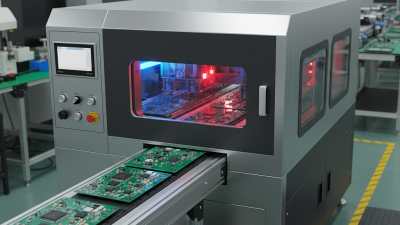
Moreover, the conveyor system helps transport PCBs smoothly through the machine. It connects different sections of production. The machine may also integrate a control system for managing the overall operation. While technology has advanced, challenges remain. Calibration is vital. Errors can occur if components are misaligned. Regular maintenance is necessary to ensure consistent performance.
PCB Pick and Place Machine Efficiency Comparison
This chart illustrates the efficiency of different PCB pick and place machines based on their placement speed (parts per hour) and accuracy rate (%). Each type of machine offers varying capabilities to enhance production line effectiveness.
How PCB Pick and Place Machines Operate Step-by-Step
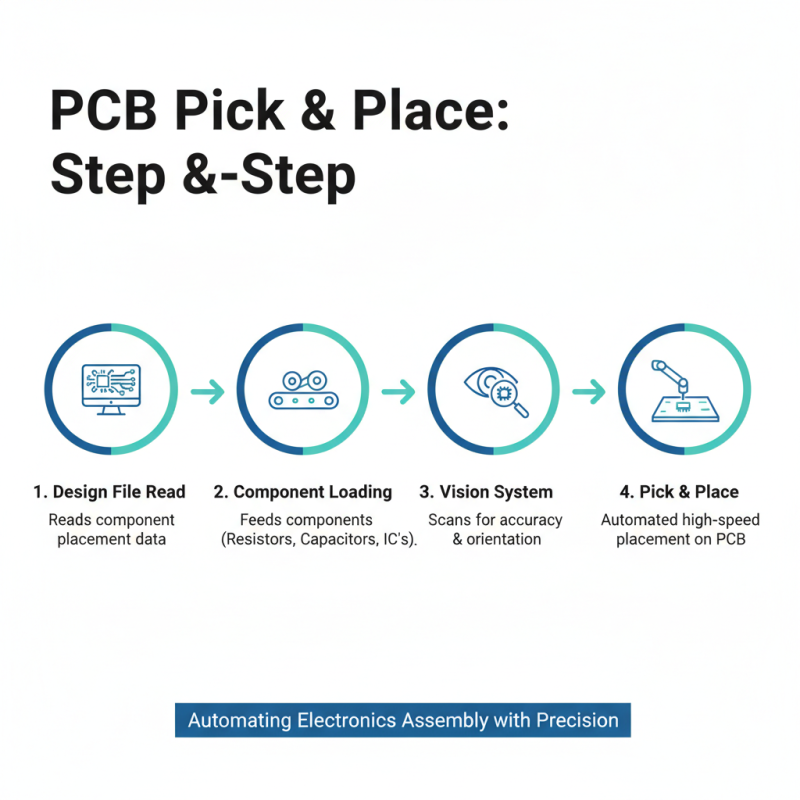
PCB pick and place machines are vital in electronics manufacturing. They automate the assembly process, placing components on printed circuit boards (PCBs) with accuracy. The operation begins with the machine reading a design file. This file contains the exact placement requirements for various components, like resistors and capacitors.
Once the design is loaded, the machine uses a vision system. This system identifies the exact locations for placement. The pick and place head then selects components from feeders. These feeders hold different types of electronic parts. The speed and precision during this step are critical. Any misalignment can lead to defects.
After picking the components, the machine moves to the PCB. It carefully places each component in the designated spot. Sometimes, factors like material variations can affect placement accuracy. After placement, the PCB often goes through inspection. This step ensures quality before moving to soldering. Each stage is essential, but it is not foolproof. Even advanced machines may miss defects. Continuous improvement in processes and technology remains necessary for optimal performance.
Advantages of Using PCB Pick and Place Machines in Manufacturing
PCB pick and place machines have revolutionized electronic manufacturing. These machines automate the placement of components onto printed circuit boards. This automation increases speed and precision. The ability to handle small components accurately is a significant advantage. These machines reduce assembly time significantly, improving overall efficiency.
Using a PCB pick and place machine minimizes human error. Manual assembly often leads to mistakes, such as misplaced components. Automated machines can operate 24/7, ensuring consistent quality. This reliability is crucial in high-volume production. Companies can meet tight deadlines without compromising on accuracy.
However, the initial investment can be substantial. Smaller manufacturers may struggle with the upfront costs. Yet, over time, the efficiency gained can offset these expenses. Embracing technology requires a mindset shift. Manufacturers must be willing to adapt and refine their processes continuously to optimize these machines' full potential.
Applications of PCB Pick and Place Machines in Different Industries
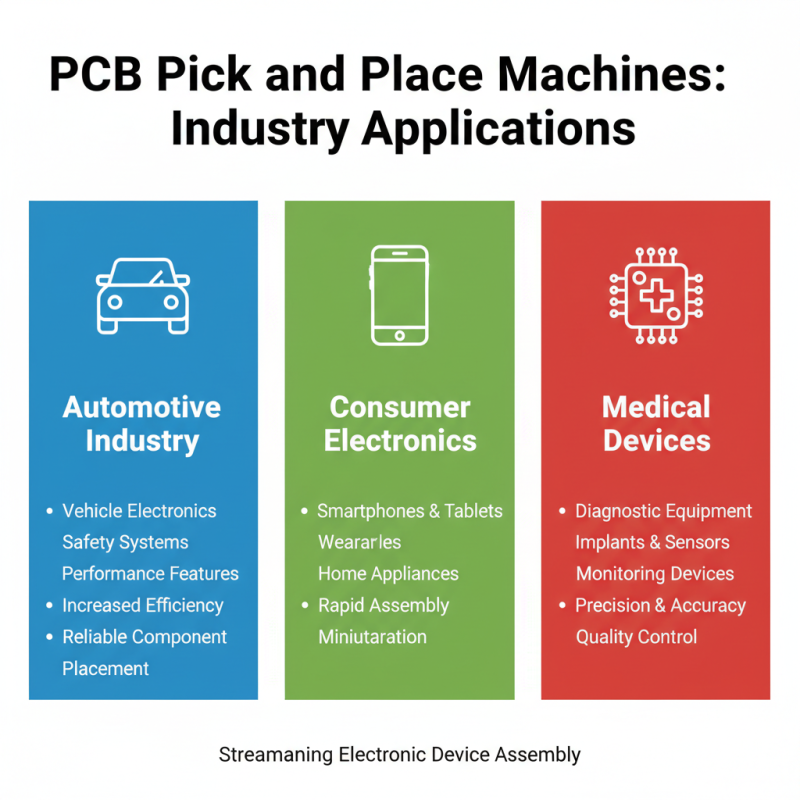
PCB pick and place machines are crucial in various industries. They streamline the assembly of electronic devices. In the automotive industry, these machines improve efficiency. Accurate placement of components leads to reliable vehicle electronics. This precision is vital for safety systems and performance features.
In the consumer electronics sector, speed and accuracy matter. PCB pick and place machines meet high demand for devices like smartphones and tablets. They handle small, intricate components with ease. However, the rapid pace of technology can challenge these machines. Keeping up with new designs and components is a constant pressure.
The medical industry also benefits significantly from these machines. They ensure precise assembly of life-saving devices like pacemakers and diagnostic equipment. Any misplacement could lead to serious consequences. Therefore, continuous improvement in technology and training is essential. Despite their high efficiency, human oversight is still needed. Regular checks and maintenance can prevent costly errors.