Smt Machine Buyers Guide Top Features and Benefits?
Choosing the right Smt Machine is crucial for any electronics manufacturing business. These machines play a vital role in surface mount technology and can significantly impact production efficiency. Understanding their features and benefits can be overwhelming for buyers.
This guide will simplify your decision-making process. We will explore essential features, such as precision and speed, which directly affect productivity. Additionally, we'll discuss the benefits these machines bring to your production line, including cost savings and improved quality control.
However, it’s essential to recognize that not all Smt Machines are equal. Factors like maintenance and training also matter. Potential buyers must reflect on their specific needs. Investing in the right machine means evaluating both technical specifications and long-term reliability. This careful consideration can lead to a more informed purchase and better outcomes for your business.
Understanding Smt Machines: An Overview of Key Features
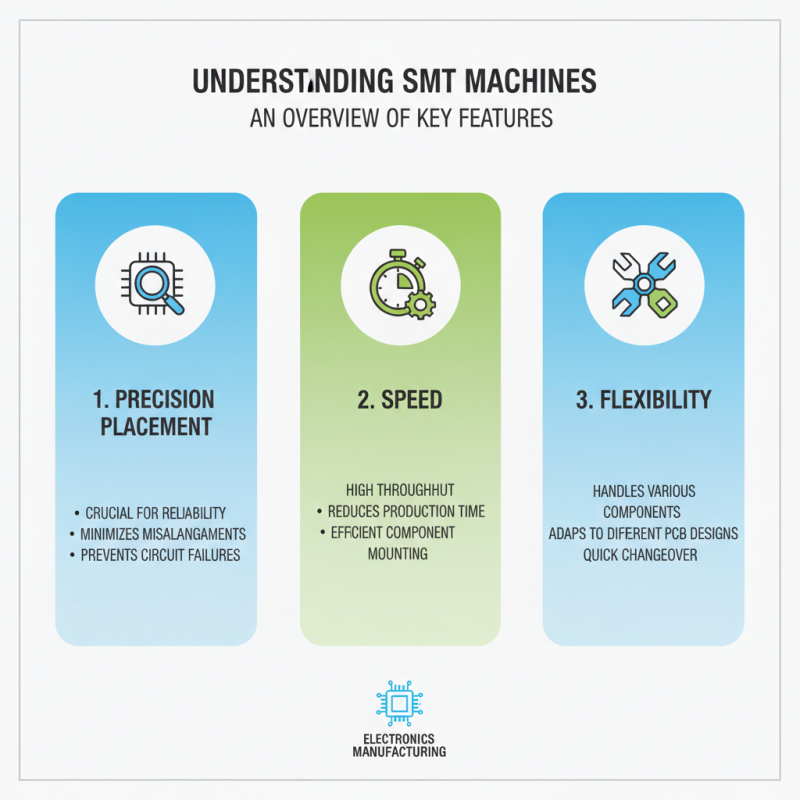
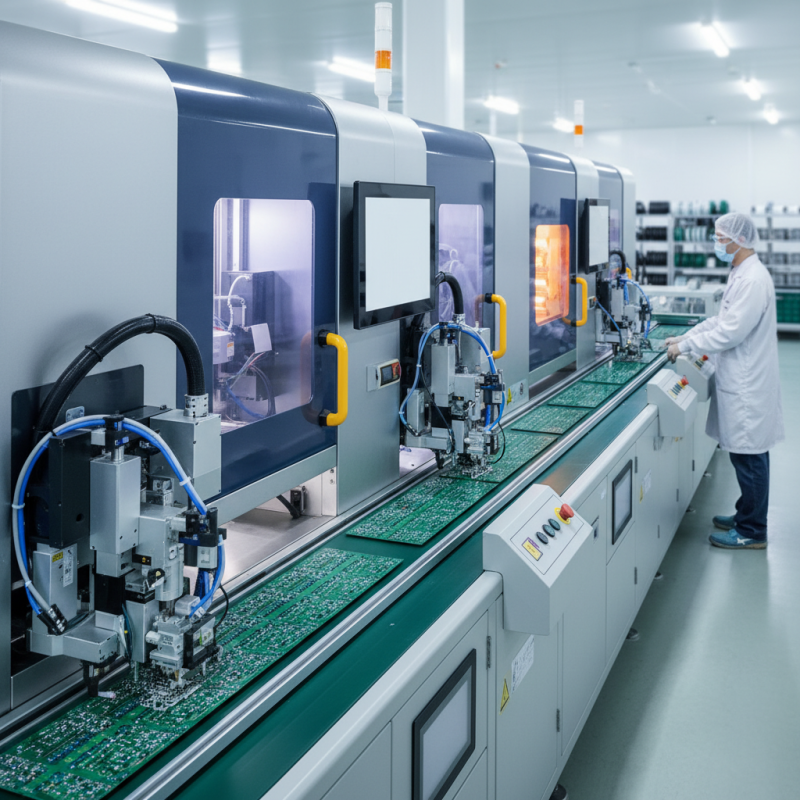
Understanding SMT machines is essential for anyone in the electronics manufacturing industry. These machines serve a critical role in the placement of surface-mounted components on printed circuit boards (PCBs). Their key features include precision placement, speed, and flexibility in handling various component types. Precision is crucial, as even minor misalignments can lead to circuit failures.
The benefits of utilizing SMT machines go beyond speed and efficiency. They enable manufacturers to produce compact and sophisticated electronic devices. Many machines offer customizable settings, allowing users to adapt to different production requirements or component sizes. This flexibility is vital for businesses that cater to a diverse range of products. However, selecting the right machine may be challenging due to numerous options and specifications available.
Maintenance of SMT machines can be overlooked but is crucial for consistent performance. Regular checks can prevent breakdowns and enhance longevity. Users must reflect on their operational needs and consider how effectively a machine meets them. Balancing features, such as size limitations and throughput speed, against budget constraints is necessary for an optimized production process.
Evaluating Performance: Critical Metrics for Smt Machine Buyers
When evaluating SMT machines, performance metrics are crucial. Buyers should focus on speed, precision, and reliability. These factors significantly impact production efficiency. A machine that operates faster can increase output, but speed shouldn't compromise accuracy. Precision is essential for high-quality products. Flaws in components can lead to costly rework and delays.
Reliability is often overlooked, yet it's vital. A machine that frequently breaks down can disrupt production lines. Consider maintenance costs and downtime when making decisions. Buyers should also assess the machine's adaptability. As technology evolves, the ability to upgrade features can extend the machine's lifespan.
It's important to gather feedback from industry peers. Personal experiences with different machines provide insights that online reviews may not cover. Engage with operators to understand practical challenges. Sometimes, what looks good on paper fails to perform in real-world scenarios. Buyers should think critically about these aspects to ensure they choose a machine that truly meets their needs.
Smt Machine Buyers Guide Top Features and Benefits
| Feature |
Description |
Benefits |
Critical Metrics |
| Placement Accuracy |
Measures how precisely components are placed on the circuit board. |
Improved yield and reduced rework. |
<= 25 µm accuracy |
| Speed |
Rate of component placement per hour. |
Increased production efficiency and throughput. |
1000+ components/hour |
| Flexibility |
Ability to handle different PCB sizes and component types. |
Supports diverse product lines and quicker changeovers. |
Supports PCBs up to 600 x 600 mm |
| Automation Level |
Degree of automated processes in handling and placing components. |
Reduced manual labor and errors. |
Up to 90% automation |
| User Interface |
Ease of use of the machine’s control software. |
Faster training for operators and less downtime. |
User satisfaction rating of 90%+ |
Essential Benefits of Investing in Smt Technology for Manufacturers
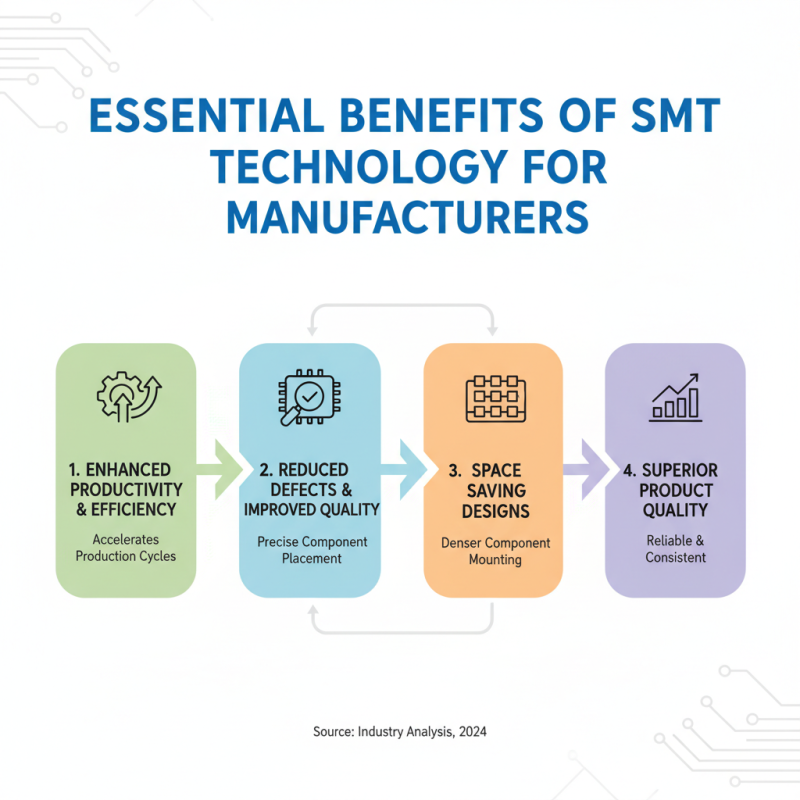
Investing in SMT technology offers significant advantages for manufacturers. This technology enhances productivity and efficiency. With precise placement, SMT machines reduce the risk of defects. They also allow for denser component mounting, which saves space on printed circuit boards. Many manufacturers find that adopting SMT not only improves their product quality but also accelerates their production cycles.
Furthermore, the integration of SMT can lead to cost savings over time. Although the initial investment may seem high, the long-term benefits outweigh the costs. Reduced labor and higher yield rates translate into better profit margins. However, implementing SMT requires proper training for operators. Adequate knowledge is essential to maximize the potential of these machines. Some manufacturers struggle during this transition and must continually assess their processes.
In addition, the flexibility of SMT technology can cater to a variety of projects. It allows for quick adjustments in designs, adapting to market demands. This versatility can pose challenges, particularly for companies unprepared for rapid changes. Embracing these benefits while recognizing potential pitfalls is crucial for sustainable growth in the competitive manufacturing landscape.
Comparative Analysis: Different Types of Smt Machines Available
When considering the various types of Surface Mount Technology (SMT) machines available, it's crucial to understand their unique features and benefits. Different SMT machines serve different purposes, and each type has specific capabilities. For instance,
pick-and-place machines excel in speed and accuracy, with recent reports indicating that they can achieve placement rates of up to 30,000 components per hour. In contrast,
screen printers are pivotal for applying solder paste consistently. An effective printer can deliver a print accuracy of ± 25 microns, which is critical for high-density PCBs.
Another important type is the reflow oven, which ensures proper soldering of components. Modern models can handle various profiles, adapting to different soldering techniques. A study found that using a controlled nitrogen environment can decrease defects by up to 50%. However, the choice of SMT machine frequently involves trade-offs. While speed may be high in one model, precision can suffer, leading to potential rework.
Moreover, the cost of these machines can vary dramatically, influencing buyer decisions. High-end machines may offer features like automated vision systems, but they come with a steep price. Advances in technology also mean that newer systems might soon outperform existing equipment, leaving older machines less efficient. Though many buyers prioritize cutting-edge technology, they should also weigh factors like maintenance costs and operator training.
Tips for Selecting the Right Smt Machine for Your Production Needs
Selecting the right SMT machine is crucial for optimizing your production line. It's essential to consider specific features that align with your operational needs. Evaluate the placement speed, accuracy, and flexibility of the machine. These aspects will determine how well the SMT machine can handle your unique products.
When considering an SMT machine, focus on automation capabilities. A more automated system can boost efficiency. However, you should reflect on your team’s skill level. Training may be necessary, and this can lead to initial downtime. Another factor to keep in mind is the machine’s maintenance requirements. High maintenance might decrease productivity during critical production phases.
Cost is another significant element. A lower-priced machine might lack some desired features. It's vital to balance cost and capability. Researching the total cost of ownership is wise. Investing in a quality machine can pay off over time. Ultimately, ensuring it meets your production needs is key.