7 Best BGA Rework Stations for Global Buyers
Global electronics production is becoming more distributed, while repair quality remains closely tied to process control. SEMI’s World Fab Forecast 2024 tracks more than 1,400 semiconductor facilities and production lines worldwide. That expanding base increases demand for dependable board-level repair, especially when replacing costly BGA packages.
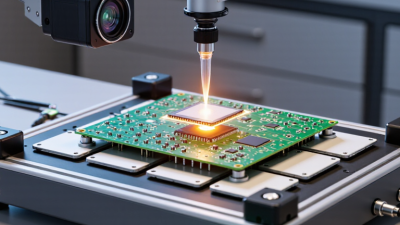
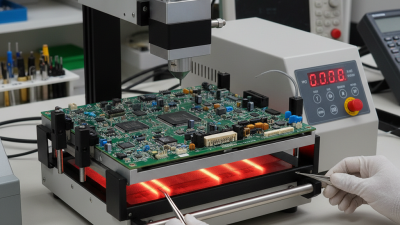
A Bga Rework Station must do more than produce heat. It should control temperature, airflow, alignment, and cooling across different board sizes. IPC-7095C, the industry guideline for BGA design and implementation, highlights the importance of thermal profiles, pad geometry, solder joint reliability, and inspection. These details matter on a crowded PCB, where a small nozzle error can damage nearby connectors or lift a copper pad.
Market reports also show why global buyers need careful comparisons. Fortune Business Insights projects continued growth in the semiconductor packaging market through 2032, although estimates vary by research scope. That variation deserves attention. A cheaper machine may look attractive, yet weak calibration, limited local service, or poor documentation can increase downtime. A practical evaluation should include repeatability tests, profile recording, nozzle availability, operator training, and warranty response. Try a real board.
This guide reviews seven leading BGA rework stations for international buyers. It considers heating performance, optical alignment, software control, safety features, maintenance, and total ownership cost. The ranking is not perfect; workshop conditions differ, and supplier claims require verification. Still, the comparison aims to connect published specifications with everyday repair realities, from a warped motherboard to a lead-free package needing precise thermal control. Reliable decisions begin with evidence, not impressive photographs.
What Is a BGA Rework Station and Who Needs One?
What Is a BGA Rework Station and Who Needs One?
A BGA rework station removes and replaces ball grid array packages on printed circuit boards. It uses controlled heating, airflow, alignment, and inspection. The operator must manage temperature carefully. Excess heat can damage nearby components or separate circuit layers.
Demand is growing with electronic complexity. The World Semiconductor Trade Statistics reported global semiconductor sales of 627.6 billion dollars in 2024, a 19.1% increase from 2023. More boards now require compact, high-density packages. SEMI’s World Fab Forecast also projected global semiconductor manufacturing equipment spending near 110 billion dollars in 2025. These figures do not directly measure rework equipment. They show why repair capability matters across the supply chain.
Who needs one? Contract manufacturers, electronics repair centers, prototype laboratories, aerospace maintenance teams, and high-value product makers are common users. It is useful when a board costs far more than the failed component. It may be unnecessary for low-volume repairs outsourced to specialists. That decision is often overlooked.
Tips:
Choose a system with accurate thermal profiling, optical alignment, and repeatable documentation. Check whether its nozzle range fits your package sizes. Use IPC-7095C guidance for BGA design and assembly practices. Record each rework cycle, including preheat temperature and cooling time. Even experienced technicians make mistakes. A small thermocouple shift can change the result. Test on scrap boards before touching production hardware.
Seven Leading BGA Rework Stations for Global Buyers
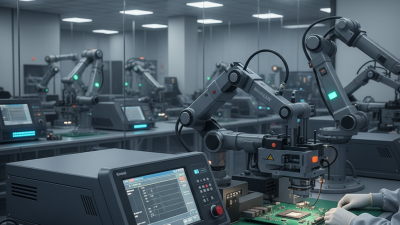
Seven leading BGA rework stations for global buyers differ in heating control, alignment, and serviceability. A practical shortlist includes infrared, hot-air, hybrid, optical-alignment, bottom-heating, vacuum-pickup, and compact manual stations. Each design suits different production pressures.
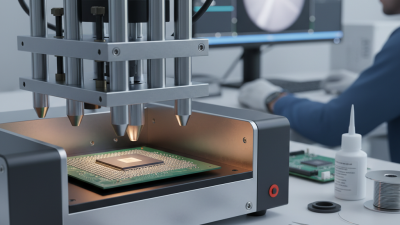
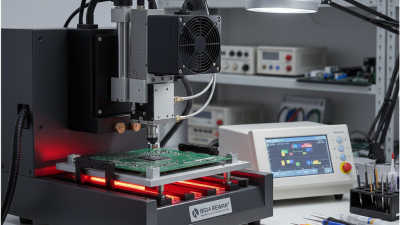
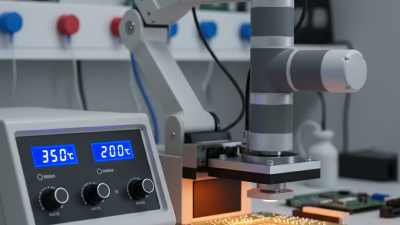
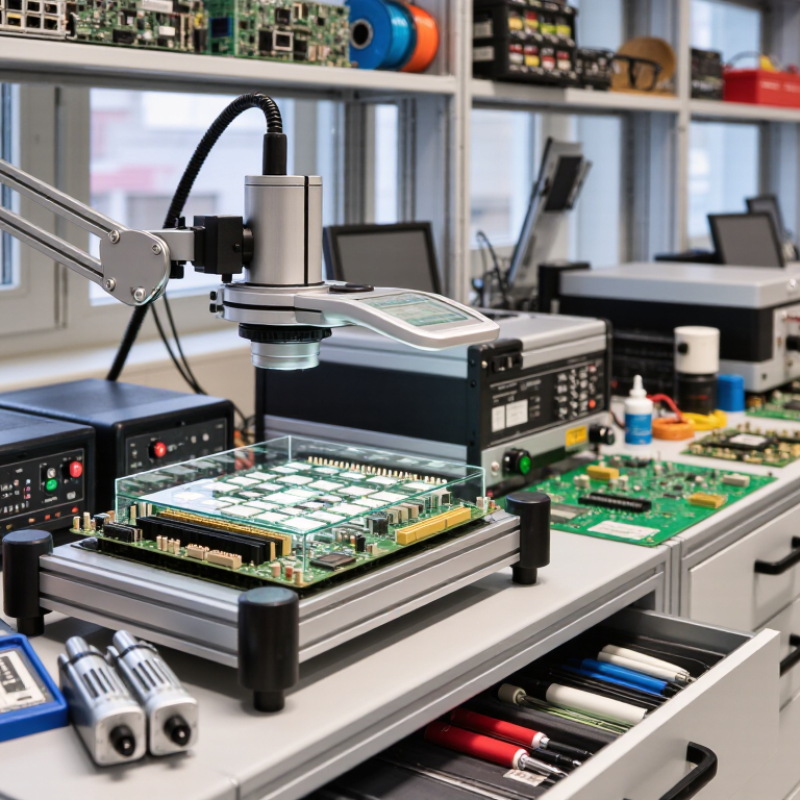
Infrared stations heat evenly across larger boards and reduce nozzle contact. Hot-air systems offer flexible airflow for small components. Hybrid stations combine top and bottom heating, helping limit board warping during lead-free work. Optical-alignment stations use cameras to position fine-pitch packages accurately. That matters under a 0.4-millimeter pitch. Bottom-heating stations support multilayer boards by stabilizing the underside. Vacuum-pickup systems improve placement control after solder removal. Compact manual stations fit repair benches and smaller budgets.
Test the real workflow.
During equipment checks, buyers should examine temperature stability, profile recording, nozzle availability, and operator visibility. A stable reading is useful, but the thermocouple position can still mislead results. Board size also matters. A station suitable for a phone board may struggle with a large industrial controller. Ask about voltage options, replacement heaters, calibration access, training, and warranty response times. Local support can prevent a small fault from stopping production for days.
No station is perfect. Infrared heating may need careful shielding, while hot air can disturb nearby parts. Optical systems improve accuracy but often increase cost and setup time. Careful buyers should test sample boards before purchase, because published specifications rarely show every weakness.
7 Best BGA Rework Stations for Global Buyers - Seven Leading BGA Rework Stations for Global Buyers
| Rank |
Station Type |
Heating Method |
Top Heater Output |
Preheater Area |
PCB Capacity |
Temperature Control |
Typical Power |
Best Application |
| 1 |
Professional 4-Zone Rework Platform |
IR + hot air |
1,200 W |
320 × 320 mm |
Up to 400 × 350 mm |
Closed-loop PID |
3.5–4.5 kW |
High-volume repair and lead-free production |
| 2 |
Advanced 3-Zone Rework Platform |
IR + hot air |
1,000 W |
300 × 300 mm |
Up to 380 × 320 mm |
Closed-loop PID |
3.0–4.0 kW |
Contract manufacturing and laboratory repair |
| 3 |
Mid-Range 3-Zone Station |
IR + hot air |
800 W |
280 × 280 mm |
Up to 350 × 300 mm |
Digital PID |
2.5–3.5 kW |
Small production lines and service centers |
| 4 |
Compact 2-Zone Rework Station |
IR + hot air |
650 W |
240 × 240 mm |
Up to 300 × 280 mm |
Digital sensor feedback |
1.8–2.5 kW |
General electronics repair and prototyping |
| 5 |
Vision-Assisted Desktop Station |
Hot air + IR preheat |
700 W |
220 × 220 mm |
Up to 280 × 260 mm |
Thermocouple feedback |
1.5–2.2 kW |
Fine-pitch BGA inspection and rework |
| 6 |
Portable Dual-Heat Station |
Hot air + ceramic heater |
500 W |
180 × 180 mm |
Up to 220 × 220 mm |
Digital temperature display |
1.0–1.6 kW |
Field service and low-volume repair |
| 7 |
Entry-Level Manual Rework Station |
Hot air |
350 W |
150 × 150 mm |
Up to 180 × 180 mm |
Thermostat control |
0.8–1.2 kW |
Training, hobby use, and occasional repairs |
Note: Specifications are representative market ranges for comparable BGA rework station configurations. Actual performance depends on nozzle design, board thickness, thermal mass, profile settings, and local power requirements.
How to Choose a Station for Different Repair Requirements
Choosing a BGA rework station starts with the repair, not the machine’s advertised temperature. Board size, package density, solder type, and daily volume matter more. IPC’s May 2024 North American PCB Statistical Program reported a 3.8% year-over-year sales decline. That pressure makes repeatable repairs and controlled scrap costs increasingly important.
For small boards and occasional work, choose a compact station with optical alignment, a bottom preheater, and adjustable hot-air control. For multilayer boards, select independent top and bottom heating zones. Closed-loop temperature control is essential. Use thermocouples near the package, not only on the heater. IPC-7711/7721 provides recognized guidance for component removal and rework practices. A station should also support lead-free profiles and store process records.
High-volume repair teams need stronger airflow control, larger board capacity, fast nozzle changes, and automatic profile logging. Nitrogen capability can help reduce oxidation, but it does not repair poor alignment. The operator still matters. A 2024 electronics manufacturing survey from IPC identified skilled-labor shortages as a continuing industry concern, so clear software and training support deserve attention.
I once selected a station by power rating alone. That was a mistake. Excess heat damaged nearby connectors, despite a successful first joint. Buyers should test real boards before purchasing. Measure peak temperature, cycle time, voiding, and rework yield. A cheaper station may become expensive when every failed repair consumes a board, a component, and an hour.