inquiry
Leave Your Message

Top 10 PCB Conveyor Suppliers for Global Buyers?

Choosing a reliable Pcb Conveyor supplier can shape an entire electronics production line. The right partner supports stable board transfer, cleaner handling, and fewer avoidable stoppages. Global buyers must examine more than catalog photos or attractive prices. Conveyor width, belt material, transfer speed, ESD protection, and machine compatibility all deserve close attention.

This guide introduces ten Pcb Conveyor suppliers serving international buyers. Each company is considered through practical factors, including manufacturing experience, engineering capability, product range, customization, quality control, and after-sales support. We also consider communication speed, export experience, installation guidance, and spare-parts availability. These details matter when a conveyor is installed beside a screen printer, reflow oven, or inspection system. A delayed replacement belt can interrupt production more than expected.

Real factories rarely operate under perfect conditions. Boards vary in size, operators need adjustments, and layouts change after installation. Therefore, a supplier should provide clear specifications and realistic technical advice. Certifications can support credibility, but documents alone do not prove dependable performance. Factory audits, sample testing, customer references, and direct discussions with engineers offer stronger evidence. No ranking is perfect. Buyer priorities differ, and a supplier suitable for high-volume assembly may not fit a smaller workshop. This overview is a practical starting point, not a final purchasing decision. Verify every claim before signing a contract.
Top 10 PCB Conveyor Suppliers for Global Buyers?

PCB Conveyor Systems: Definition, Functions, and Industrial Applications

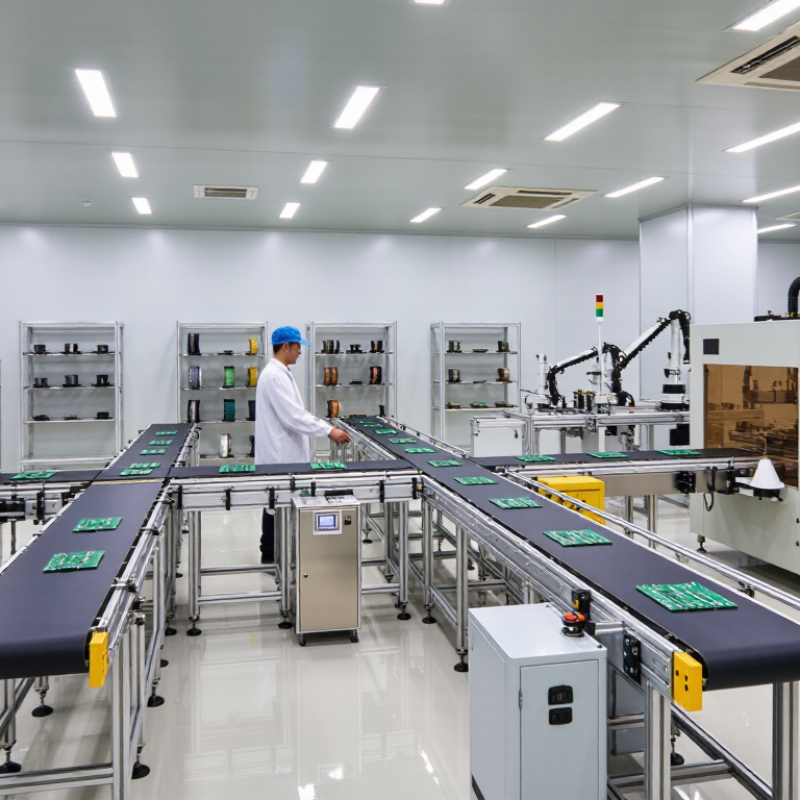
A PCB conveyor system moves printed circuit boards between production stations with controlled speed, height, and spacing. It may include belt conveyors, roller transfers, buffer units, inspection bridges, and board turners. The system connects solder paste printing, placement, reflow, inspection, testing, and packaging. Its purpose is simple: maintain a steady material flow without damaging delicate boards.

According to Grand View Research, the global conveyor system market was valued at about USD 9.2 billion in 2023. Electronics manufacturing is one important application area. Prismark’s 2024 industry forecast placed global PCB sales near USD 70 billion, showing the scale of the production environment.

These figures do not prove every factory needs automation. Product mix matters more. A line producing small batches may need flexible changeovers, while high-volume production needs buffers and stable cycle times.

For global buyers, practical checks matter. Ask for ESD control, adjustable rail width, compatible SMEMA communication, and clear maintenance access.

A conveyor should transfer a board smoothly, not scrape its edge or interrupt inspection timing. Operators should reach sensors without removing large covers. That detail is often missed.

IPC standards can guide PCB handling and quality expectations, but they do not replace site testing. Reported market figures also vary by research method. That is worth questioning. Run sample boards through the complete line before approving the supplier.

Key Features to Compare When Selecting a PCB Conveyor Supplier

Selecting a PCB conveyor supplier requires more than comparing catalog prices. Check conveyor width, board thickness range, speed control, and load capacity. These details must match your existing production line. A machine that handles 50 boards per minute may still create delays if transfers are poorly aligned.

Inspect the frame and belt materials closely. Stainless steel supports cleaning and reduces corrosion near soldering equipment. ESD-safe surfaces help protect sensitive assemblies during movement. Ask for test records, electrical diagrams, and maintenance instructions. Reliable suppliers should explain motor life, sensor accuracy, spare-part availability, and response times. Clear documentation matters across time zones.

Do not overlook integration. Confirm communication protocols, conveyor height adjustment, and interface compatibility with inspection or placement equipment. Request a sample trial using your actual PCB sizes. It can reveal vibration, edge damage, or unstable stopping that specifications hide. That assumption can fail.

After-sales support deserves equal attention. Compare installation training, remote diagnostics, warranty limits, and local service coverage. A low purchase price may become expensive when one sensor stops production. I would also review factory quality controls and shipment protection. Wooden crates, moisture barriers, and shock indicators are practical details. They are easy to miss.

One concern remains: buyers often overvalue speed. Consistent handling is usually more valuable than maximum throughput. Ask for references from similar factories, but verify the claims independently. Even strong suppliers may have weak documentation or slow revisions. That is worth testing before approval.

Regional and Global Factors Shaping PCB Conveyor Supplier Selection

Top 10 PCB Conveyor Suppliers for Global Buyers?

Regional and Global Factors Shaping PCB Conveyor Supplier Selection

Selecting a PCB conveyor supplier requires more than comparing prices. Factory layout, local voltage, climate, and technical standards can change the decision. A conveyor proven in a dry Asian plant may need stronger corrosion protection in coastal Europe. High humidity can affect sensors, belts, and control cabinets. Buyers should verify ESD performance, board width ranges, transfer accuracy, and line speed with measured data.

Regional service also matters. A nearby technician can reduce production delays, while overseas support may depend on time zones and spare-part customs clearance. Ask about installation training, remote diagnostics, replacement motors, and response times. Supplier experience with local safety requirements adds practical value. Still, certificates alone are not enough. A document may be valid, but the machine can remain difficult to maintain.

Tips: Request a sample layout review. Test the smallest and largest PCB sizes. Confirm socket types and communication protocols. Calculate the full delivered cost, including freight, duties, training, and spare parts. Speak with a recent customer if possible. One assumption often survives too long: the cheapest quotation is rarely the cheapest operating choice. I have seen buyers overlook access space around conveyors. That mistake makes cleaning and repairs unnecessarily slow. Technically elegant designs can also fail when operators receive little training.

Top 10 PCB Conveyor Suppliers for Global Buyers?

Regional and Global Factors Shaping PCB Conveyor Supplier Selection

The chart compares the relative importance of ten practical selection criteria across major buyer regions. The index is normalized from 0 to 100 for procurement benchmarking and reflects common PCB assembly requirements, including line integration, ESD control, safety compliance, throughput, service coverage, and total cost of ownership. It is not a supplier ranking or market-share measurement.

Top 10 PCB Conveyor Suppliers for International Buyers

Top 10 PCB Conveyor Suppliers for International Buyers

Choosing among the top PCB conveyor suppliers requires more than comparing online prices. International buyers should examine conveyor width, belt speed, loading capacity, and compatibility with existing SMT equipment. A reliable supplier provides clear drawings, operating tolerances, spare-part lists, and installation guidance. These details reduce delays when equipment crosses borders.

International purchasing also demands careful supplier verification. Check factory experience, quality-control procedures, export records, and compliance documentation. Ask whether the conveyor supports your voltage, safety requirements, and regional plug standards. Request sample videos or a remote factory inspection. Warranty terms matter. So does response time. A low-cost quotation may become expensive when replacement parts arrive slowly or technical support is unclear. No supplier is perfect. Even strong suppliers may overlook a small interface detail.

Tips: Share your PCB dimensions, line layout, production speed, and preferred delivery location before requesting quotes. Compare total ownership cost, not only the purchase price. Confirm packaging protection, customs documents, installation support, and after-sales communication in writing. It is also wise to order a test unit when integration risks are high. Small checks prevent large problems. Be willing to revise your shortlist after technical discussions; the first choice is not always the best fit.

Buyer Checklist for Evaluating PCB Conveyor Quality and Service

Top 10 PCB Conveyor Suppliers for Global Buyers

Buyer Checklist for Evaluating PCB Conveyor Quality and Service

A reliable PCB conveyor should move boards smoothly, without sudden stops or edge damage. Check the frame, belt tension, guide rails, and transfer height during a live factory test. Ask for speed ranges, load limits, ESD controls, and maintenance records. A polished brochure is not proof. The conveyor must match your actual board sizes and production rhythm.

Tips: Bring a sample PCB to the evaluation. Watch it enter, transfer, and exit. Listen for rattling. Measure the gap between machines. Request test videos, inspection reports, and references from comparable production lines. Confirm whether replacement belts, sensors, and motors are readily available in your region.

Service quality often decides the real cost. Review installation support, response times, training, warranty terms, and spare-parts procedures. Ask who will troubleshoot a failure during a night shift. Clear answers matter. Suppliers should provide manuals, wiring diagrams, and preventive-maintenance schedules. Remote support is useful, but it cannot repair a misaligned conveyor. I have seen teams focus heavily on purchase price, then overlook integration delays. That decision can become expensive. Also, do not assume every certificate covers the complete system; verify its scope and issue date. A short pilot run may reveal more than several meetings.

Top 10 PCB Conveyor Suppliers for Global Buyers?

Buyer Checklist for Evaluating PCB Conveyor Quality and Service

No. Evaluation Area Practical Buyer Benchmark Documents or Tests to Request Suggested Weight Buyer Score
(1–5)
1 PCB Compatibility The conveyor should support the buyer’s PCB length, width, thickness, edge clearance, board weight, and panelized-board configuration without interference. Request a dimensional drawing, approved PCB specification sheet, maximum load calculation, and a sample-board trial or video test. 15% ___
2 Transfer and Conveyor Design Use a stable belt, chain, or roller transfer system with controlled speed, adjustable width, anti-jam protection, and smooth PCB handoff between machines. Review mechanical drawings, transfer-gap dimensions, speed range, width-adjustment method, and continuous-run test results. 12% ___
3 SMEMA or Line Communication The equipment should support the required machine-to-machine communication method and clearly document connector pinout, signal logic, and interface limitations. Request the interface specification, wiring diagram, I/O list, communication test record, and compatibility confirmation for upstream and downstream equipment. 10% ___
4 ESD Protection The conveyor should be suitable for electrostatic-controlled production areas and include documented grounding, conductive or dissipative contact surfaces, and an ESD control plan. Request ESD test records, grounding-point details, material specifications, and evidence of an ESD program aligned with ANSI/ESD S20.20 where applicable. 12% ___
5 Positioning Accuracy Board stopping, side-guide alignment, sensor repeatability, and transfer height should remain consistent during repeated production cycles. Request repeatability data, sensor specifications, guide-adjustment tolerances, and a measured test using the buyer’s actual PCB or panel. 10% ___
6 Build Quality and Safety The frame, guards, fasteners, cable routing, emergency-stop system, and access points should be designed for continuous industrial use and safe maintenance. Review the bill of materials, safety risk assessment, emergency-stop test, machine photographs, maintenance-access layout, and applicable conformity documents. 10% ___
7 Controls and Usability Operators should be able to adjust speed, width, operating mode, alarms, and board-flow settings through clearly labeled controls or an intuitive HMI. Request the control-panel layout, HMI screenshots, user manual, alarm list, language options, and software or parameter backup procedure. 8% ___
8 Factory Acceptance Testing A documented FAT should verify dimensions, speed, loading, transfer performance, sensors, communication, ESD provisions, safety functions, and fault recovery. Agree on a signed FAT protocol before production and require test videos, measured results, punch-list closure, and customer approval records. 8% ___
9 Service, Spares, and Warranty The supplier should provide a written warranty, replacement-part list, troubleshooting guidance, preventive-maintenance schedule, and defined response channels. Request warranty terms, spare-parts pricing, recommended stock levels, service-response commitment, remote-support process, and escalation contacts. 8% ___
10 Export and Project Delivery The supplier should provide clear production milestones, export packing, installation documentation, electrical requirements, commissioning support, and delivery-risk controls. Request a project schedule, packing specification, commercial invoice data, installation manual, training plan, commissioning checklist, and spare-parts shipment process. 7% ___

Scoring method: Rate each category from 1 to 5, multiply the score by the suggested weight, and compare suppliers using the same evidence requirements. The benchmarks are intended for structured purchasing evaluation; final requirements should be confirmed against the buyer’s PCB format, production line, electrical standards, destination-market regulations, and acceptance-test procedure.