inquiry
Leave Your Message

China Top 10 Radial Insertion Machine Manufacturers?

Choosing a Radial Insertion Machine manufacturer involves more than comparing catalog prices. The right equipment must match component dimensions, lead spacing, PCB thickness, and production volume. A machine that handles a common radial capacitor may still need different tooling for relays or connectors. Small details matter.

This guide reviews ten manufacturers in China and the factors buyers can use to assess them. These include insertion accuracy, operating speed, feeder compatibility, changeover time, and the availability of technical support. Ask for clear specifications, sample-run results, and details about commissioning before making a decision. A fast cycle rate is useful, but it means little if setup takes hours or insertion quality varies between boards.

Look closely at the actual work process. How easily can operators load components? Can the machine handle your board layout without repeated adjustments? Is spare tooling available? These questions help connect a supplier’s claims with real factory needs. No ranking is perfect. Manufacturer capabilities and service quality can change, so verify current information directly and compare like-for-like configurations.

The goal is not to name a universal winner. It is to help engineering and purchasing teams narrow their options with practical evidence. A brief trial with representative boards can reveal issues a brochure cannot. That extra check is easy to overlook, yet it may prevent a costly mismatch.
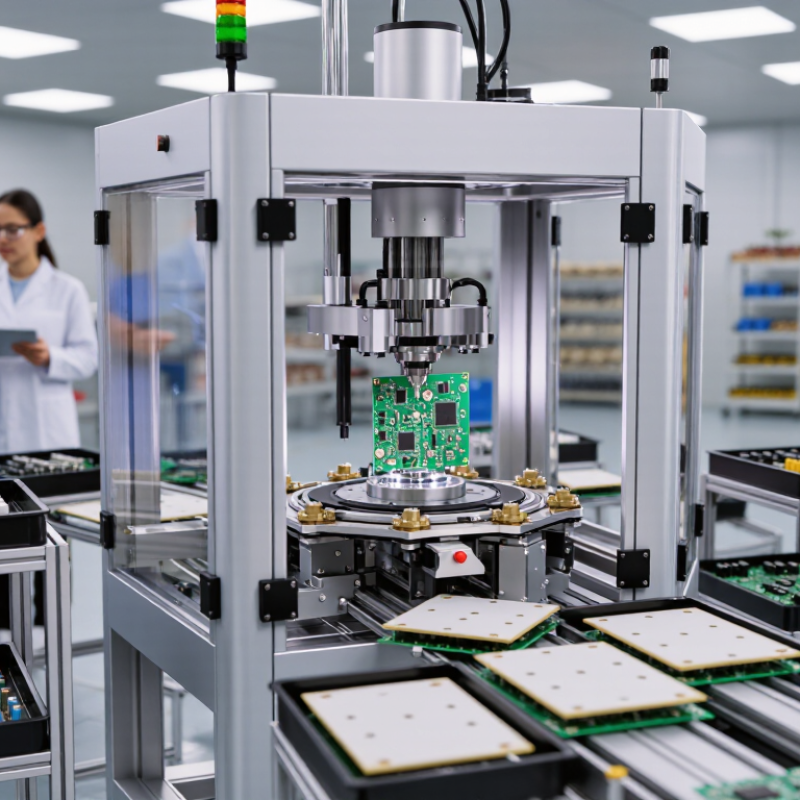
China Top 10 Radial Insertion Machine Manufacturers?

Understanding Radial Insertion Machines and Their Applications

Understanding Radial Insertion Machines and Their Applications

Radial insertion machines place components with leads arranged around a central body into matching holes on a printed circuit board. They are commonly used for capacitors, LEDs, and some connectors. The machine aligns each part, inserts its leads, and may cut or clinch them, depending on its configuration. Small details matter: lead spacing, component height, and hole position must match the board design.

These machines suit through-hole production lines, including mixed-technology assembly where surface-mounted and through-hole parts share one board. They can improve consistency on repeated jobs, but setup still takes care. Feeder settings, board support, and insertion force all affect results. A common planning mistake is assuming every radial part feeds equally well. It doesn’t. Unusual lead shapes or fragile bodies may need testing before a full production run. Automation helps, but it is not a cure-all.

Tips: Check component drawings and machine specifications before choosing a setup. Run a small batch, then inspect lead alignment and board surfaces under good light. Keep samples from the trial. They can reveal problems that a quick visual check misses. Even careful planning can overlook one awkward part. Recheck it.
How China’s Radial Insertion Machine Industry Is Organized

China Top 10 Radial Insertion Machine Manufacturers?

China’s radial insertion machine industry is organized around equipment makers, component suppliers, and automation integrators. Machine builders design insertion heads, feeding systems, and control software. Local suppliers often provide motors, sensors, pneumatic parts, and machined components. Integrators connect machines with conveyors, inspection stations, or existing production lines.

The categories can overlap. A manufacturer may build its own machine but rely on outside suppliers for feeders or controls. Some firms focus on standard equipment; others adapt tooling for a customer’s board layout and component spacing. That distinction matters on the factory floor. A sample board, lead pitch, and target insertion rate can reveal more than a catalogue photo. Public information may not show how quickly a supplier can provide spare parts or technical support. That gap deserves attention.

Tips: Ask for a trial using your actual PCB and components. Check changeover time, insertion accuracy, and operator access. Request clear documentation for setup and routine maintenance. Small details count. A neat demonstration is useful, but repeatable results across a full shift are more convincing.

Profiles of 10 Chinese Radial Insertion Machine Manufacturers

A useful profile of ten Chinese radial insertion machine manufacturers should compare more than catalog speed. Examine their experience with leaded components, board thickness, pitch range, and changeover time. Ask how each machine handles bent leads, uneven component tapes, and mixed production batches. These details matter on the factory floor. A fast machine is not always the best fit.

The International Federation of Robotics reported 276,288 industrial robot installations in China in 2023, representing 51% of global installations. This is broad automation context, not a measure of radial insertion machine sales. Still, it helps explain why local builders increasingly emphasize automated feeding, vision checks, and line integration. In comparing ten supplier profiles, check whether quoted placement rates include real board conditions, and request sample-run results where possible.

Service deserves equal attention. Compare spare-part availability, operator training, software support, and the time needed to change feeders. Ask for references from manufacturers producing similar board volumes. A polished demonstration can hide setup losses. Published specifications also vary in how they define accuracy and throughput, so direct comparisons can be imperfect. Profiles are most useful when they separate verified test data from supplier claims.

Comparing Manufacturers by Technology, Capacity, and Support

A useful comparison of ten radial insertion machine manufacturers starts with the workpiece, not the brochure. Check supported component sizes, lead spacing, board thickness, and insertion direction. A machine that handles a wide component range may still need changeovers for mixed production. Ask for a trial using your own boards and components. Real evidence matters.

Technology affects placement accuracy and everyday adjustments. Compare feeder design, vision options, programming steps, and fault messages. Ask how the machine detects a bent lead or an empty feeder. Then review output figures carefully: stated capacity may depend on board layout, operator skill, and component mix. Request a timed run under conditions close to yours. Small details count.

Support can shape the machine’s value over years of use. Check technician response times, spare-part availability, training, and remote troubleshooting arrangements. Request references from factories with similar production needs, and ask what maintenance interruptions they have experienced. A polished demonstration is useful, but it cannot show every production problem. This is easy to overlook. I would also compare service terms in writing; verbal promises are hard to measure later. One comparison may remain imperfect, especially when suppliers calculate capacity differently, so document assumptions alongside each quotation.

Key Factors for Evaluating a Potential Machine Supplier

When evaluating a radial insertion machine supplier, look beyond the quoted cycle rate. Check whether the machine supports your component lead spacing, board thickness, and required insertion force. Ask for a sample run using your actual components and PCB layout. Watch for bent leads, inconsistent seating depth, and missed insertions. Small defects add up. Confirm how quickly operators can change feeders and recipes between jobs. Ask for documented accuracy checks, maintenance schedules, and spare-part availability.

Tips: Request a live demonstration, not just a video. Bring a short list of your most challenging components. Record changeover time and defect counts during the trial.

A capable supplier should explain setup limits clearly and provide practical training for operators and maintenance staff. Review how faults are diagnosed, what service response is available, and whether manuals include useful diagrams. Compare the full operating cost, including tooling, consumables, and planned downtime. A polished presentation can be reassuring, but it is not evidence of long-term reliability. Some trial results may not reflect months of production; leave room for that uncertainty and ask for customer references with similar workloads.

China Top 10 Radial Insertion Machine Manufacturers? - Key Factors for Evaluating a Potential Machine Supplier

Use these ten criteria to compare potential suppliers. Confirm all specifications against your components, PCB design, production targets, and acceptance requirements; performance depends on the complete application.

No. Evaluation factor What to check Useful evidence to request
1 Component compatibility Confirm the machine supports the radial components used in production, including their lead spacing, lead diameter, body dimensions, and packaging format. A written component range and a demonstration using representative production parts.
2 PCB and layout suitability Check supported board dimensions, thickness, panel format, hole sizes, insertion locations, and clearance around components and fixtures. A review of your PCB files and a documented list of any layout or fixture constraints.
3 Insertion quality and repeatability Assess placement consistency, lead forming and cutting quality, and the machine’s ability to insert parts without damaging components or boards. Sample boards, inspection results, and an agreed acceptance test using your parts.
4 Throughput and cycle-time basis Compare quoted speed with your actual program, component mix, board handling, replenishment, and changeover needs. Clarify what operations are included in the cycle-time figure. A timed production trial on a representative board, with the test conditions stated.
5 Feeder capacity and changeover Review feeder count, supported packaging types, replenishment method, setup steps, and how easily programs or product variants can be changed. A feeder configuration proposal and a changeover demonstration for your product mix.
6 Programming and data handling Check program creation and editing, data import options, recipe management, user permissions, and compatibility with your production workflow. A software demonstration and a clear description of supported file formats and interfaces.
7 Inspection and fault recovery Determine how the machine detects or reports feeding, insertion, and board-handling faults, and how operators identify and recover from them. A demonstration of alarms, recovery procedures, and available inspection or traceability functions.
8 Line integration and safety Check conveyor and signal interfaces, factory utility requirements, guarding, emergency stops, and the documentation supplied for installation and safe operation. An interface list, installation requirements, and applicable safety documentation for the delivered configuration.
9 Service, training, and spare parts Evaluate commissioning support, operator and maintenance training, troubleshooting access, spare-parts availability, and service arrangements for your location. A written support plan, training scope, recommended spare-parts list, and warranty terms.
10 Total cost and acceptance terms Compare the complete cost of ownership, including tooling, installation, training, maintenance, consumables, and expected production downtime—not just the purchase price. An itemized quotation, warranty conditions, delivery scope, and measurable factory or site acceptance criteria.