inquiry
Leave Your Message

China Top 10 PCB Oven Manufacturers for Global Buyers?

Choosing a Pcb Oven manufacturer in China involves more than comparing prices. Buyers need equipment that matches their board dimensions, production volume, and soldering process. A machine may look capable in a catalog, yet details such as temperature uniformity, conveyor stability, and exhaust design matter on the factory floor. Small differences can affect yield.

This guide introduces ten Chinese manufacturers for global buyers to research. It is a starting point, not a ranking or an endorsement. Company capabilities, product ranges, and export support can change, so confirm current information directly with each supplier. Ask for temperature-profile data, equipment specifications, warranty terms, and references from customers with similar production needs. If possible, review a sample board run or arrange a technical discussion before placing an order. Clear answers are a good sign. Vague promises are not.

Also consider installation, operator training, spare parts, and response times across time zones. These practical details can shape the ownership experience as much as the oven itself. Check whether the proposed model fits your line layout and local power requirements. Request written confirmation. A low purchase price may not reflect the full cost of commissioning, maintenance, or downtime. No manufacturer is automatically the right choice for every buyer; even a strong supplier may not suit a specific process. Use the profiles that follow to build a shortlist, then verify claims against your own production requirements.
China Top 10 PCB Oven Manufacturers for Global Buyers?

What PCB Ovens Do and Where They Are Used

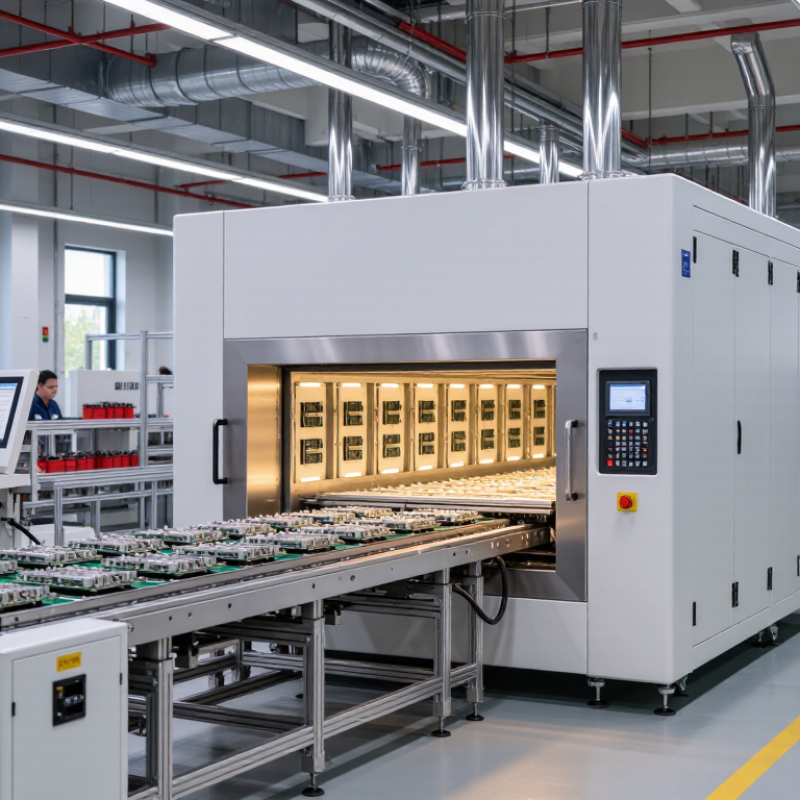
PCB ovens control heat so electronic components bond reliably to printed circuit boards. In surface-mount production, reflow ovens gradually warm the board, activate solder paste, and cool the assembly without excessive thermal stress. A typical machine uses several heating zones, conveyor speed controls, and temperature sensors. Engineers compare the measured thermal profile with the solder paste supplier’s recommended range.

These ovens also support adhesive curing, conformal coating drying, and moisture removal before assembly. In factories, operators may place them after printing and component placement lines. They are also used in laboratories for prototype runs, repair departments, and small-batch production. A nitrogen atmosphere can reduce oxidation during reflow, although it adds operating cost and requires careful monitoring. Ventilation matters when coatings or adhesives release vapors.

From practical production experience, uniform airflow often matters as much as maximum temperature. Large boards, heavy copper areas, and mixed component sizes can heat unevenly. Small boards behave differently. A longer heating profile is not automatically better. Buyers evaluating Chinese PCB oven manufacturers should request profile data, zone accuracy, conveyor stability, maintenance access, and service response details. Factory demonstrations can reveal problems that brochures hide. One overlooked issue is operator training; even a precise oven can produce weak joints when loading, profiling, or cleaning practices are inconsistent. Temperature records should be retained for traceability, though some smaller workshops still treat them as optional.
How to Evaluate PCB Oven Manufacturers for Global Sourcing

How to Evaluate PCB Oven Manufacturers for Global Sourcing

Evaluating a PCB oven manufacturer requires more than comparing quoted prices. Check thermal uniformity across the full working width, not only the center zone. Ask for measured data at several conveyor positions and board loads. A credible supplier should explain heating zones, airflow design, conveyor accuracy, and temperature control clearly. Request sample profiles using your actual solder paste and board thickness. Generic test results may look impressive but reveal little.

Factory experience appears in practical details. Inspect assembly areas, calibration records, weld quality, insulation, and spare-part storage. Review electrical safety documents required in your destination market. Ask how the manufacturer manages software updates, alarm records, and preventive maintenance. Operators should receive usable training, not only a brief video. Support response times matter when production stops at midnight.

Total sourcing risk includes shipping, installation, utilities, and future repairs. Confirm voltage, exhaust requirements, nitrogen consumption, chamber dimensions, and export packaging. Speak with comparable users, preferably those running similar board volumes. A polished factory tour is helpful, but it can still miss weaknesses. I would request a live acceptance test before final payment. Include heating stability, conveyor speed, alarm functions, and data logging in the agreement. Some buyers focus too heavily on the machine price. That is an understandable mistake. A cheaper oven may require costly modifications, longer commissioning, or unavailable components later. Loose promises should never replace measurable specifications.

Profiles of Ten Leading PCB Oven Manufacturers

China’s PCB oven sector includes ten distinct manufacturer profiles for global buyers. One specializes in compact batch ovens for prototypes and small production runs. Another builds conveyorized reflow systems with precise zone control. A third focuses on energy-saving circulation and insulated chambers. These differences matter on a real factory floor.

A fourth manufacturer develops curing ovens for solder masks, coatings, and adhesives. A fifth supplies large-format systems for automotive and industrial boards. Another combines drying, preheating, and cooling in one line. A seventh emphasizes custom chamber dimensions for unusual panel sizes. An eighth provides nitrogen-ready reflow equipment with controlled oxygen levels.

The ninth profile centers on budget-conscious machines for growing factories. The tenth offers advanced monitoring, remote diagnostics, and production data records. Experienced buyers should request thermal profiling results, calibration documents, spare-parts plans, and operator training. Ask how the supplier handles uneven airflow at chamber corners. Small details matter.

No manufacturer is perfect. A low price may hide slower heating or limited technical support. Some impressive specifications also need verification under actual load conditions. Factory audits, sample testing, and clear acceptance criteria reduce uncertainty. Buyers should compare temperature uniformity, throughput, maintenance access, electrical standards, and delivery capability before approving a purchase.

Comparing Oven Technologies, Capacities, and Support Services

China’s top PCB oven manufacturers serve different production realities, from prototype benches to high-volume SMT lines. The strongest comparisons begin with oven technology, not catalog size. Forced-convection reflow ovens provide controlled heat across multiple zones. Infrared systems can heat quickly, but they may expose uneven results on dense boards. Vapor-phase systems offer stable thermal transfer, although operating costs and process familiarity deserve close review.

Capacity also changes the buying decision. Check the usable conveyor width, heating-zone count, maximum board height, and hourly throughput. A ten-zone oven may suit complex assemblies, while a shorter system can support smaller batches with lower energy use. Ask for temperature uniformity data from real test boards. A glossy specification sheet is not enough. Production speed should match actual loading patterns, not an optimistic laboratory estimate.

Support services often separate reliable suppliers from merely capable fabricators. Confirm installation guidance, operator training, spare-part availability, remote diagnostics, and response times before signing an order. A supplier that documents calibration procedures shows stronger process discipline. Request sample profiles using your solder paste, board thickness, and component mix. Results can change. I have seen buyers focus on peak temperature while overlooking cooling control, conveyor stability, and maintenance access. That mistake becomes expensive during night shifts. A practical factory visit, clear acceptance criteria, and honest discussion of limitations usually reveal more than promotional claims.

China Top 10 PCB Oven Manufacturers for Global Buyers? - Comparing Oven Technologies, Capacities, and Support Services

Comparison note: The entries below are anonymized capability profiles, not named companies or a verified ranking. Specifications describe representative equipment configurations available in the market; actual options, performance, and service coverage vary by model and supplier and should be confirmed in writing.

Profile Oven technology Typical configuration Capacity indicators Best suited to Support and verification points
1. Compact reflow profile Forced-hot-air convection reflow About 6–8 heating zones; single-lane conveyor; recipe-based temperature control Common working widths are around 300 mm; confirm usable board width and edge clearance Prototyping, small batches, and space-limited SMT lines Check installation requirements, profile setup training, spare-heater availability, and warranty terms
2. General-purpose reflow profile Multi-zone forced convection About 8–10 zones; adjustable conveyor speed; top-and-bottom heating on many configurations Often offered with working widths near 400 mm; throughput depends on board size and recipe Mixed-product electronics assembly Request temperature-uniformity data, profile validation support, and a clear local service response process
3. High-throughput reflow profile Extended multi-zone convection reflow About 10–12 zones; longer heating and cooling sections; inline conveyor integration Working widths around 450–500 mm are common options; confirm line speed under the required thermal profile Continuous production with frequent product changeovers Verify energy consumption, exhaust connection requirements, remote diagnostics, and commissioning scope
4. Nitrogen-capable reflow profile Convection reflow with optional nitrogen atmosphere Typically multi-zone; nitrogen controls and oxygen monitoring may be available as options Often configured for medium-to-wide boards; nitrogen consumption depends on sealing, settings, and process conditions Assemblies where oxidation control is a process requirement Ask for oxygen-level measurement details, gas-consumption data, leak-check procedures, and operating-cost estimates
5. Dual-lane reflow profile Dual-lane convection reflow Two parallel conveyor lanes; lane spacing and independent control depend on the design Capacity depends on lane width, board spacing, and whether lanes can run independently Higher line utilization where compatible products can share a thermal process Confirm lane synchronization, board-transfer compatibility, changeover time, and support for dual-lane profiling
6. Vacuum reflow profile Vacuum-assisted reflow, generally in a chamber or specialized inline system Vacuum cycle combined with controlled heating; cycle time and chamber format are model-specific Capacity is usually assessed by chamber load, board dimensions, and cycle time rather than conveyor width alone Applications requiring void reduction or a specialized soldering process Request process trials using representative assemblies, cycle-time data, maintenance requirements, and vacuum-system service details
7. Hybrid-heating reflow profile Infrared-assisted or hybrid infrared/convection heating Heating method and zone arrangement vary; temperature recipe control is essential Capacity should be matched to board size, component mix, and thermal-mass variation Selected production or development processes where the heating method suits the assembly Validate temperature uniformity on actual boards and ask about recipe storage, calibration, and operator training
8. PCB drying and curing profile Batch or conveyor hot-air drying and curing Chamber racks or continuous conveyor; temperature range, airflow, and exhaust are application-dependent Compare chamber volume or belt width, usable loading area, and recovery time after loading Moisture removal, coating cure, adhesive cure, and other defined thermal processes Confirm airflow uniformity, temperature mapping options, exhaust needs, and process-specific safety controls
9. Vertical curing profile Vertical or rack-based thermal curing system Boards or carriers move through a vertical thermal path; handling and carrier design are system-specific Capacity depends on rack positions, dwell time, carrier spacing, and loading method Facilities seeking a smaller floor footprint for curing or aging processes Review loading ergonomics, interlocks, temperature uniformity, carrier compatibility, and maintenance access
10. Custom-engineered oven profile Application-specific conveyor, chamber, or combined thermal system May include custom width, handling, atmosphere control, exhaust, or factory-line interfaces Defined from board dimensions, required cycle time, loading method, and process recipe Unusual board formats, special process constraints, or integrated production lines Agree on acceptance tests, documentation, spare-parts list, software access, training, and international service responsibilities

Buyer checklist: Compare equipment using the same sample board, thermal profile, target line speed, and acceptance criteria. Request written confirmation of usable width, temperature uniformity, energy and gas consumption where applicable, installation conditions, warranty coverage, spare-parts lead times, and after-sales support in the destination country.

What Global Buyers Should Check Before Choosing a Supplier

When comparing China’s top 10 PCB oven manufacturers, global buyers should examine more than price and catalog images. A reliable supplier should provide measured thermal uniformity, conveyor speed data, heating-zone specifications, and production capacity. Ask for test records from a similar PCB assembly line. Numbers without test conditions are weak evidence.

Request a sample run before signing a large order. Check whether solder quality remains stable across the oven width and during continuous operation. Inspect insulation, emergency controls, exhaust design, and electrical documentation. The supplier should explain installation, operator training, maintenance intervals, and spare-part availability. Factory experience matters, but it is not proof of current quality. A video tour helps, though an independent inspection is stronger. Some buyers overlook service response time. That mistake becomes expensive after installation.

Tips: Compare identical technical requirements in writing. Ask how temperature accuracy is calibrated and recorded. Confirm warranty coverage, delivery terms, and remote support hours. Review references from overseas users, but contact them directly when possible. A supplier that avoids sample testing or gives vague answers deserves caution. It is also wise to calculate total ownership cost, including energy use, filters, repairs, and training. I have found that the cheapest quote rarely stays cheapest. Still, even a detailed checklist cannot remove every risk; buyer-side assumptions sometimes create delays.

China Top 10 PCB Oven Manufacturers for Global Buyers

What Global Buyers Should Check Before Choosing a Supplier

This illustrative buyer-scoring model prioritizes the practical factors used when evaluating PCB oven suppliers. The percentages represent review weights, not market share, sales data, or rankings of individual companies.

Buyers should verify thermal uniformity, production capacity, energy efficiency, safety compliance, after-sales support, spare-parts availability, total cost of ownership, and acceptance-test results before placing an order.