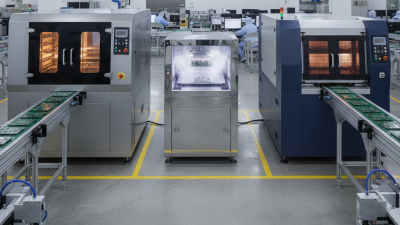
China Top 10 Reflow Machine Manufacturers? This question deserves more than a simple ranking. A reliable comparison must examine engineering experience, thermal control, production records, service capacity, and measurable customer results. In electronics factories, a Reflow Machine is not merely a heated conveyor. It controls solder paste activation, component protection, throughput, and long-term joint reliability.
Dr. Ronald C. Lasky, a recognized SMT process authority, has said, “The reflow profile is the recipe for soldering.” That principle remains practical on the factory floor. Engineers watch thermocouple readings, conveyor speed, nitrogen use, and temperature uniformity across the chamber. A difference of only a few degrees can affect small BGAs, lead-free alloys, or heat-sensitive connectors. Good manufacturers provide profile software, maintenance guidance, training, and accessible technical support.
This guide reviews ten Chinese manufacturers through those practical criteria. It considers machine architecture, heating zones, cooling design, energy efficiency, software functions, and export experience. It also looks beyond attractive specifications. Some suppliers publish impressive numbers, yet provide limited evidence from demanding production lines. That weakness deserves attention.
No ranking is perfect. Factory conditions vary widely. A machine suitable for automotive electronics may not fit a compact LED assembly line. Buyers should request sample boards, profile reports, reference customers, and a factory demonstration before making a decision. Price matters, but downtime costs more. The strongest Reflow Machine manufacturers combine stable process control with honest communication and responsive after-sales support. That balance is difficult to measure, but it often determines whether equipment performs well after installation.
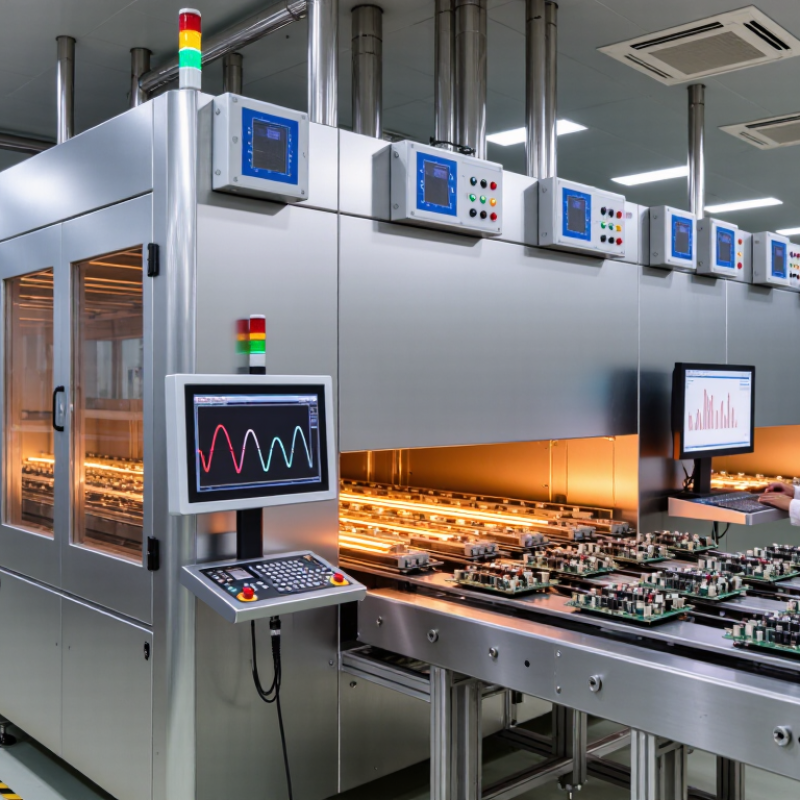
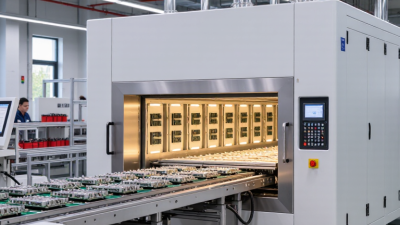
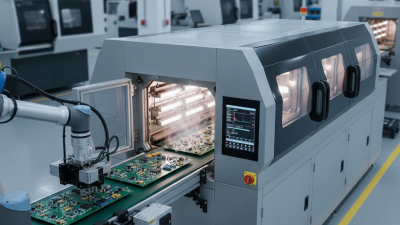
A reflow machine is a controlled thermal system used to solder surface-mount components onto printed circuit boards. It does not simply “heat the board.” The machine moves each assembly through zones with different temperatures and airflow. Preheating removes moisture and reduces thermal shock. The soak zone activates solder flux. The reflow zone melts the solder paste, often above 217°C for lead-free alloys. Cooling then solidifies the joints.
Inside the oven, conveyor speed, zone temperature, nitrogen level, and airflow shape the soldering profile. Engineers usually verify this profile with thermocouples attached to real boards, not empty test panels. That detail matters. A board may look acceptable while hidden joints contain voids, insufficient wetting, or excessive intermetallic growth. IPC’s 2023 Electronics Industry Impact Report valued global electronics production at about 3.4 trillion dollars in 2022, showing why repeatable thermal control matters across high-volume production. A 2024 Research and Markets forecast also indicates continued expansion in reflow soldering equipment demand through the decade. These figures describe market direction, not guaranteed machine performance.
Practical results depend on paste storage, stencil design, component density, and maintenance. More zones are not automatically better. A poorly tuned profile wastes energy and can damage sensitive components. Experienced operators inspect conveyor stability, filter condition, and temperature uniformity every shift. Still, even skilled teams can miss slow drift. That is where routine profiling and recorded process data remain essential. Maybe the machine is not the main problem; the process discipline often is.
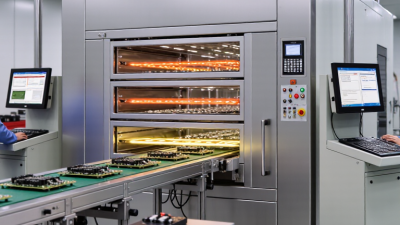
Evaluating Chinese reflow machine manufacturers requires more than comparing prices. A 2024 IPC industry survey identified material costs, labor shortages, and supply-chain disruption as continuing production concerns. These pressures make energy use, maintenance access, and spare-parts availability important purchasing factors. Ask for measured power consumption under a defined thermal profile, not a catalog estimate.
Thermal control deserves close inspection. Review the oven’s temperature uniformity, conveyor stability, nitrogen consumption, and profile repeatability. IPC-7530C recommends process profiling across the board, including difficult locations and large thermal-mass components. A reliable supplier should provide profile records, calibration certificates, and sample boards for verification. Insist on evidence.
Service quality often separates similar machines. Check response times, remote diagnostic capability, training hours, and the local inventory of heating elements, sensors, and belts. The 2024 World Semiconductor Trade Statistics forecast projected continued semiconductor market growth, increasing pressure on assembly capacity and uptime. That growth does not guarantee every supplier will scale support effectively.
Factory visits can reveal useful details. Watch operators load boards, clean filters, and recover from alarms. Ask for references from plants using comparable board sizes and lead-free alloys. Some specifications look impressive but remain difficult to verify. I would treat unusually broad temperature claims cautiously, especially when no test method is disclosed. Reliability comes from documented performance, not confident language.
China’s top 10 reflow machine manufacturers serve electronics factories, contract assemblers, and research workshops. Their equipment supports lead-free soldering, stable heat transfer, and repeatable PCB production. A practical comparison should examine temperature zones, conveyor width, nitrogen control, software access, and maintenance response. These details affect daily output more than impressive brochures.
In factory visits, engineers often check the oven profile using a data logger and several thermocouples. A reliable machine should heat evenly from the first board to the last. Operators also need clear alarms, accessible filters, and simple recipe storage.
Energy consumption matters too, especially when production runs continuously. Some manufacturers offer strong customization, but unusual specifications can increase training time and spare-parts costs.
A top-ten ranking should not depend only on price or export volume. Buyers should request sample profiles, reference installations, warranty terms, and service records. Certification documents deserve careful review. They may be valid, but their scope can differ between models. I have found that installation support is sometimes underestimated. Small delays in exhaust setup or conveyor alignment can disturb solder quality. The market changes quickly, so this list should be checked against current factory performance, technical audits, and verified customer feedback.
China Top 10 Reflow Machine Manufacturers: Comparing Technology, Applications, and Production Capabilities
A useful comparison should examine technology before production volume. Leading manufacturers commonly offer hot-air convection, nitrogen-assisted, and vapor-phase reflow systems. Each method suits different assembly conditions. Convection machines support general PCB production with stable temperature control. Nitrogen systems reduce oxidation during demanding soldering work. Vapor-phase equipment can provide highly uniform heating for sensitive components. However, advanced technology does not automatically guarantee better results.
Applications reveal practical differences between suppliers. Some machines serve prototypes and small batches, while others support continuous automotive, medical, or industrial production. Engineers should check board size, component height, heating zones, conveyor design, and thermal profiling software. Production capability also matters. A dependable manufacturer should provide factory testing, spare parts, operator training, and documented quality procedures. Certifications help, but they cannot replace measured performance.
Tips: Request a sample thermal profile using your actual board. Compare temperature uniformity, energy use, nitrogen consumption, and recovery time. Ask how quickly service teams respond. Visit the production site when possible. Factory scale can look impressive, yet assembly quality may vary between models. I would also question rankings based only on sales claims. Data from installed machines, acceptance tests, and long-term maintenance records is more reliable. No supplier is perfect. The best choice depends on process stability, application risk, budget, and future capacity.
Anonymized comparison based on commonly available machine configurations and publicly reported industry specifications
| Rank | Anonymous Manufacturer Profile | Primary Reflow Technology | Heating Zones | Maximum PCB Width | Peak Temperature | Typical Throughput | Typical Applications | Production Capability | Common Compliance Features |
|---|---|---|---|---|---|---|---|---|---|
| 1 | Manufacturer Profile 01 | Forced-convection hot-air reflow with nitrogen option | 10–12 | 400–500 mm | 300°C | 0.8–1.5 m/min | High-volume lead-free SMT assembly, consumer electronics, industrial controls | Standardized production lines with conveyor width and recipe management options | CE-oriented electrical design, temperature logging, over-temperature protection |
| 2 | Manufacturer Profile 02 | Multi-zone convection with enhanced thermal uniformity | 8–10 | 300–400 mm | 300°C | 0.5–1.2 m/min | Small and medium PCB assemblies, LED modules, communication equipment | Flexible batch production with quick recipe changeover and compact layouts | Thermocouple monitoring, emergency shutdown, programmable temperature profiles |
| 3 | Manufacturer Profile 03 | Convection reflow with extended preheating and cooling zones | 12–14 | 500–600 mm | 320°C | 0.7–1.4 m/min | Automotive electronics, power boards, dense lead-free assemblies | Designed for larger boards and demanding thermal profiles in continuous production | Closed-loop temperature control, profile storage, smoke extraction interface |
| 4 | Manufacturer Profile 04 | Hot-air convection with optional nitrogen atmosphere control | 10–12 | 400–500 mm | 300°C | 0.6–1.3 m/min | Fine-pitch components, RF assemblies, medical and instrumentation electronics | Stable process control for high-mix production and oxidation-sensitive soldering | Nitrogen monitoring option, alarm records, password-protected recipe control |
| 5 | Manufacturer Profile 05 | Compact forced-convection reflow for low-to-medium volume use | 6–8 | 250–350 mm | 280–300°C | 0.3–0.8 m/min | Prototype manufacturing, laboratory work, education, repair and small-batch SMT | Space-efficient equipment for frequent product changes and limited floor area | Basic safety interlocks, digital temperature display, programmable operation |
| 6 | Manufacturer Profile 06 | Long-tunnel convection with independent zone adjustment | 12–16 | 500–600 mm | 320°C | 0.8–1.6 m/min | Power electronics, industrial automation, large-format control boards | High-throughput lines requiring longer soak time and broad thermal process windows | Energy-saving insulation, automatic cooling control, production data recording |
| 7 | Manufacturer Profile 07 | Lead-free convection system with optimized cooling section | 8–12 | 400–500 mm | 300°C | 0.5–1.2 m/min | LED lighting, consumer products, household appliances and general SMT | Balanced equipment for standard lead-free solder paste and medium-volume output | Temperature deviation monitoring, conveyor protection, exhaust connection |
| 8 | Manufacturer Profile 08 | High-precision convection with multi-point profile validation | 10–14 | 400–600 mm | 320°C | 0.6–1.4 m/min | Aerospace-related electronics, test equipment, high-reliability assemblies | Process-focused production where traceability and repeatable thermal results are important | Data export, profile verification, calibration support and controlled access |
| 9 | Manufacturer Profile 09 | Modular convection reflow with configurable zone layout | 8–16 | 300–600 mm | 320°C | 0.4–1.5 m/min | Contract electronics manufacturing, mixed product lines, industrial devices | Scalable configurations supporting different board sizes and production volumes | Recipe database, zone-level alarms, conveyor speed control and maintenance access |
| 10 | Manufacturer Profile 10 | Convection reflow with optional dual-track conveyor configuration | 10–14 | 400–500 mm | 300–320°C | 0.7–1.5 m/min | High-mix electronics, automotive subassemblies, smart devices and control units | Suitable for line balancing, dual-track operation and continuous factory production | Safety interlocks, exhaust monitoring, temperature alarms and process logging |
Note: Manufacturer names and brand-specific performance claims are intentionally omitted. Values are practical configuration ranges commonly available in the Chinese reflow soldering equipment market; final specifications depend on the selected model, solder paste, PCB design and process requirements.
When comparing Chinese reflow machine manufacturers, start with process evidence, not attractive catalog photographs. Ask for verified thermal profiles on boards similar to yours. A supplier should explain zone control, conveyor stability, nitrogen options, and cooling performance clearly. Short answers can reveal weak engineering support.
Inspect the factory or request a live video demonstration. Watch how operators load panels, adjust recipes, and respond to alarms. Check heating uniformity across the chamber with documented measurement methods. Request sample data, calibration records, spare-parts lists, and maintenance intervals. A reliable manufacturer will discuss limits, not promise perfect results. That honesty matters.
Review the technical team’s experience with your solder paste, board thickness, component density, and expected throughput. Confirm installation training, remote diagnostics, response times, and English documentation before signing. Ask whether software updates preserve existing recipes. Total cost includes electricity, filters, service travel, and downtime. The cheapest machine may become expensive after one failed production week. Still, supplier claims are not enough. Run a controlled sample test with acceptance criteria written in advance. Leave room for doubt. Early boards may look excellent, while long-term temperature drift remains hidden. Speak with recent users, inspect maintenance records, and compare actual output against promised capacity.