Choosing a Smd Reflow Oven is not just a matter of comparing heating zones or purchase prices. In electronics assembly, the oven must deliver a thermal profile suited to the board, solder paste, and components. A profile that works for a small prototype may not suit a dense production panel. The difference can show up in uneven joints, shifted components, or repeated adjustments on the line.
Dr. Ning-Cheng Lee, author of Reflow Soldering Processes and Troubleshooting, is a recognized authority on soldering processes. A practical takeaway from his work, paraphrased rather than presented as a direct quotation, is: “The profile must fit the assembly, not merely the oven.” That distinction matters when evaluating manufacturers in China. Ask how suppliers verify temperature uniformity, support profile development, and respond when a customer changes board designs. Look for clear specifications and practical service details, not just impressive brochures.
This guide introduces leading Chinese manufacturers and the factors that help distinguish them. These include machine configuration, process-control features, documentation, spare-parts access, and after-sales support. Details matter. A factory visit, sample run, or review of real production data can reveal more than a product page. No shortlist can replace testing with your own boards and materials. Supplier information may also be incomplete, so verify important claims directly. That takes extra effort, but skipping it can be costly.
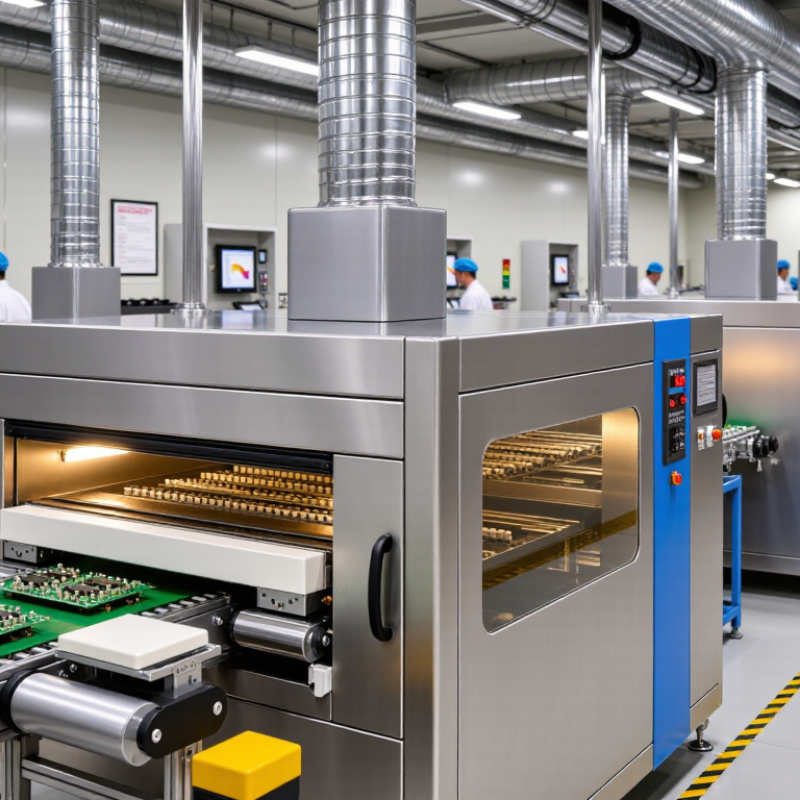
An SMD reflow oven heats printed circuit boards so solder paste melts and forms electrical and mechanical connections. Components sit on paste deposits before the board enters the oven on a conveyor. Inside, controlled heating zones gradually raise the temperature, hold it briefly, and then create a reflow peak. Cooling follows. The sequence matters. A small thermocouple attached to a test board can reveal whether the actual temperature profile matches the intended one. Board thickness and component mass affect how heat moves across the assembly.
A sound profile helps solder wet component leads and board pads without overheating sensitive parts. Too little heat may leave weak or incomplete joints. Too much can damage components or cause soldering defects. It sounds straightforward. It isn’t always. Conveyor speed, zone settings, and the spacing between boards all influence results. A profile that works for a compact board may not suit one with a large connector and dense copper areas. Preset settings can be a useful starting point, but they deserve verification. Even experienced technicians sometimes need another test run when materials or board designs change. That practical uncertainty is part of process control, not a reason to skip measurement.
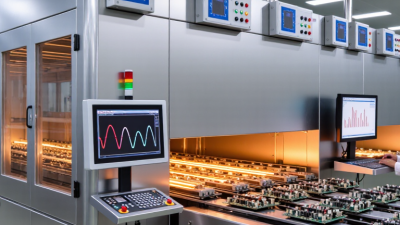
When evaluating reflow oven manufacturers in China, look beyond heating-zone counts and brochure claims. Ask for measured temperature uniformity, conveyor stability, nitrogen controls, and repeatable profiles on boards similar to yours. Request a profile report showing thermocouple positions, peak temperatures, and time above liquidus. IPC-7530 provides guidance on profiling reflow processes; a capable supplier should explain how its test method aligns with that guidance.
Capacity matters, but verify it against real production conditions. WSTS’s November 2024 forecast projected global semiconductor sales of $627.6 billion in 2024, up 19%, and $697 billion in 2025. This is not a direct forecast for reflow ovens, but it signals a growing electronics ecosystem with varied assembly demands. Ask manufacturers to demonstrate performance across your board widths, component density, and target cycle times. A polished demo is not enough.
Inspect service readiness before comparing prices. Check spare-part availability, remote diagnostics, installation support, and technician response times in your region. Ask for references from factories running comparable products, then speak with operators if possible. Listen for specifics: how quickly does the oven recover after a stop, and how often do recipes need adjustment? I would not over-trust a perfect test board. Real boards vary, and supplier claims deserve verification.
Profiles of leading SMD reflow oven manufacturers in China often reveal different strengths rather than one universal best choice. Some operate integrated factories, making equipment frames, heating modules, and control systems in-house. This can support closer production coordination, though buyers should confirm which components are actually made internally. Ask for a factory tour or a clear production-process record.
A process-focused manufacturer may emphasize temperature uniformity, profile control, and repeatable results across the heating zones. For a practical check, request a sample thermal profile using the intended board, solder paste, and conveyor speed. Look for measured data, not only a brochure curve. Details matter. Another supplier may focus on export support, offering installation guidance, operator training, and spare-parts planning. Response times should be confirmed in writing.
Compare machines against real production needs. Check working width, heating-zone count, nitrogen options, power use, and maintenance access. Ask how the supplier tests temperature stability and handles faults such as a failed fan or sensor. A polished demonstration is useful, but it may not reflect a busy production line. Request references from users with similar boards and output targets. One limitation is easy to miss: published specifications do not always describe performance under every load.
Representative temperature curve for a lead-free soldering process, shown as a technical reference rather than a manufacturer-specific specification.
The profile illustrates preheating, soaking, peak reflow, and cooling. Actual settings should be validated against the solder paste, PCB assembly, and component requirements.
Comparing Chinese SMD reflow oven manufacturers requires more than checking maximum temperature or the number of heating zones. Buyers should examine temperature uniformity, conveyor stability, and how easily operators can adjust recipes. A clear control interface helps when switching between boards with different thermal demands. Ask for a profile measured on a representative assembly, not just an empty chamber. Small details matter.
Heating technology also shapes production results. Hot-air convection is common, while nitrogen options may suit processes that need reduced oxidation. Compare zone configuration, warm-up time, cooling design, and exhaust handling against your actual workload. A longer oven is not automatically better. It may consume more floor space without improving usable throughput. Check whether the conveyor supports your board width and whether speed settings remain stable during continuous operation.
Production capability includes more than machine output. Review factory testing procedures, spare-parts availability, installation support, and documentation for maintenance. Request evidence from repeatable temperature-profile tests, and clarify what acceptance checks are included before shipment. Published specifications can look precise, yet test conditions may differ. Even a careful comparison has gaps if suppliers use different boards or measurement points. That is worth questioning. A practical trial with your own assemblies can reveal uneven heating, awkward loading, or settings that operators find confusing.
When comparing Chinese reflow oven manufacturers, look beyond the number of heating zones. Ask for temperature uniformity data, conveyor speed ranges, and sample thermal profiles for your board sizes. A profile should show how the solder paste and components respond, not just the oven’s maximum temperature. Request a trial using a representative assembly, especially if it has heavy connectors or uneven copper areas.
Check how the system is built and maintained. Inspect the chain, rail adjustment, fan access, and filters; these details affect daily operation. Ask how quickly common spare parts can be supplied and whether technicians can guide setup remotely. Small details matter. A factory visit or live video inspection can help confirm whether the stated process matches the equipment on the floor. Still, a polished demonstration may not reveal awkward cleaning access or long changeover times.
Review the manufacturer’s quality records, documentation, and support process before placing an order. Confirm that operating manuals include practical setup steps, alarm explanations, and maintenance intervals. Ask for references from customers with similar production volumes, while recognizing that their line conditions may differ from yours. No checklist catches everything. A supplier’s first answer may be incomplete; ask for evidence and clarification rather than treating confidence as proof. A short production trial can reveal issues that a specification sheet misses.