inquiry
Leave Your Message

10 Best SMT Reflow Ovens for Global Buyers?

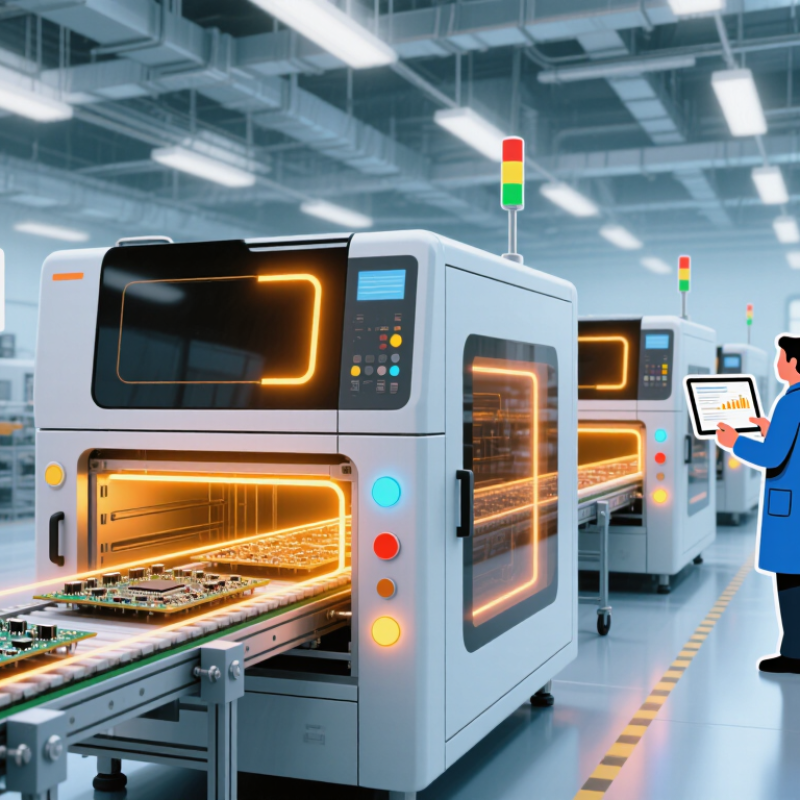
Choosing a reflow oven is not just a matter of comparing price tags or advertised throughput. In real production, the right machine must match board size, component mix, solder paste, and daily volume. A compact line assembling sensor boards has different needs from a factory processing wide panels across multiple shifts. Small details matter. Zone temperature stability, conveyor width, nitrogen options, and cooling control can all affect repeatability and yield.

This guide to the 10 Best SMT Reflow Ovens for Global Buyers examines practical selection factors, not brand claims alone. It considers heating zones, temperature profiling, maintenance access, energy use, controls, and supplier support. A capable Smt Oven Reflow system should provide clear profile data and stable operation, while allowing engineers to adjust recipes for different assemblies. Yet, no specification sheet tells the whole story. Results also depend on board design, loading, calibration, and operator practice.

Global purchasing adds another layer. Buyers may need to check installation requirements, training, spare-parts availability, service response, and documentation before placing an order. Ask vendors for reference applications and a sample profile using a comparable board, then verify claims through your own process trials. That takes time. It can prevent costly surprises. The ovens discussed here are a shortlist, not a universal ranking; the best choice depends on production goals and local support. Comparisons may remain imperfect because configurations and regional packages can differ. That uncertainty deserves attention.
10 Best SMT Reflow Ovens for Global Buyers?

What an SMT Reflow Oven Does in PCB Assembly

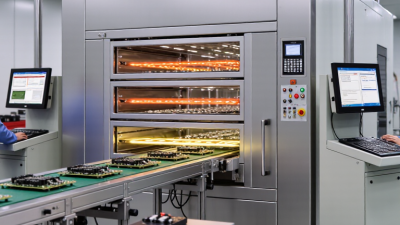
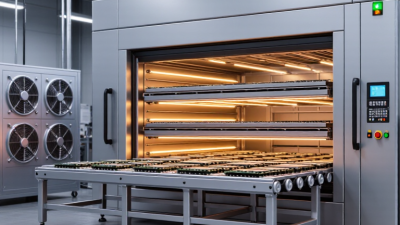
An SMT reflow oven heats a populated PCB through controlled temperature zones. Solder paste melts, wets component pads, then cools into electrical and mechanical joints. The oven does more than “bake” a board. Its profile must suit the paste, components, board thickness, and line speed. A misplaced thermocouple or uneven airflow can conceal a cold joint or overheat a nearby part. That matters.

JEDEC’s J-STD-020E sets package-dependent peak classification temperatures; some lead-free components are classified at 260°C. This is a component tolerance reference, not a universal oven setting. IPC-7530B recommends thermal profiling to verify actual board temperatures. In practice, technicians attach thermocouples to representative parts and pads, then compare measured ramp, soak, peak, and cooling stages with paste and component requirements. A clean-looking profile can still miss variation across a dense board. Recheck after product or loading changes.

Tips: Profile a real, populated board—not an empty conveyor. Check both edge and center locations, and keep the thermocouple firmly attached. Record the recipe and measurements. Small details matter; airflow can shift. The profile may still need revision.
10 Best SMT Reflow Ovens for Global Buyers? — What an SMT Reflow Oven Does in PCB Assembly

Typical Lead-Free SMT Reflow Profile (Illustrative)

An SMT reflow oven heats a populated PCB through controlled temperature zones, melting solder paste to form electrical and mechanical connections. This illustrative profile reaches a peak of 245°C and shows time above the 217°C liquidus reference. Actual settings and cycle times depend on the solder paste, components, and PCB, so each profile should be validated for the specific assembly.

How to Compare Reflow Ovens for Different Production Needs

Choosing a reflow oven starts with the boards you actually build, not the highest zone count in a catalog. Measure your widest panel and note its heaviest components. A thick power board may heat unevenly beside a small sensor board. That matters.

For low-volume work, a compact oven with stable temperature control and straightforward profile adjustment may be more useful than a high-throughput line. Larger factories should compare conveyor speed, usable heating length, and recovery time between panels. Ask how evenly the oven heats across the full belt width. A profile that works in the center may not suit boards near the edges. Test with thermocouples attached to representative components, then review peak temperature and time above liquidus against your solder paste requirements.

Also compare daily operating costs and maintenance access. Check whether filters, fans, and heating elements can be inspected without lengthy downtime. Nitrogen capability can help with certain process goals, but it adds equipment and running costs; it is not automatically necessary. Request data logs and a sample profile, then run your own panels if possible. Specifications rarely show every production issue. I would leave room for doubt: a well-matched oven on paper can still need careful tuning on the factory floor.

Ten SMT Reflow Oven Options for Global Buyers

Global buyers comparing ten SMT reflow oven options should start with the board, solder paste, and target throughput—not the zone count alone. WSTS reported global semiconductor sales of $627.6 billion in 2024, a 19.1% year-over-year increase. That growth signals expanding electronics demand, but it does not identify the right oven for any factory. A stable thermal profile matters more than an impressive specification sheet. Check peak temperature, time above liquidus, board-to-board temperature variation, and conveyor width using representative assemblies. Small details matter.

The ten options include compact four-zone, six-zone, eight-zone, and ten-zone ovens; air-convection and nitrogen-capable systems; vacuum-assisted units; dual-lane conveyors; wide-board models; and modular designs with accessible heating zones. These categories can overlap. A dual-lane oven may also use nitrogen, for example. Ask suppliers for profile data from boards close to your own, plus utility requirements, exhaust details, maintenance access, and local service coverage. Compare energy use at realistic production loads, not only rated power.

Not always. A polished demo board can hide uneven heating on dense assemblies.

I would verify repeatability across several runs before treating a quoted throughput as dependable. For global purchasing, confirm spare-part lead times and operator training arrangements before placing an order.

Key Features, Specifications, and Support to Evaluate

When comparing the 10 best SMT reflow ovens for global buyers, look beyond heating-zone counts. Check the usable conveyor width against your largest board, panel, and fixture. Confirm temperature uniformity across the working area, not only at one sensor. A machine may list eight zones, yet still struggle with uneven loading. Ask for a profile report using a board similar to yours. Small details matter.

Review belt speed, nitrogen compatibility, exhaust needs, and power requirements before comparing specifications. Request the oven’s temperature range, repeatability data, and recommended maintenance intervals in writing. Then check whether local technicians can support installation, calibration, and operator training. Ask about spare-part lead times and remote troubleshooting hours. Support is practical, not decorative. A polished specification sheet cannot tell you how quickly a failed fan will be replaced. No checklist catches everything.

For a fair evaluation, use the same test board and solder paste across shortlisted machines. Record peak temperature, time above liquidus, and results at several board locations. Compare those measurements with your process window and component limits. If a supplier cannot provide clear test conditions, treat performance claims cautiously. I would also leave room for uncertainty: production results can shift with board mass, airflow, and loading patterns. A short factory trial may reveal more than another round of brochure reading.

10 Best SMT Reflow Ovens for Global Buyers? — Key Features, Specifications, and Support to Evaluate
No. Oven Configuration Typical Heating Zones Typical Conveyor Width Heating and Atmosphere Cooling Setup Best-Fit Production Key Evaluation Points Support to Request
1 Compact entry-level convection oven 4–6 Approx. 200–300 mm Forced-air convection; air operation is common, with nitrogen availability dependent on configuration One or more cooling sections; confirm cooling capacity for the intended board and line speed Prototyping, engineering labs, and low-volume assembly Check usable board width, profile stability, exhaust requirements, and compatibility with the production conveyor Ask for installation guidance, operator training, spare-parts list, and local service coverage
2 Small-batch production oven 6–8 Approx. 250–350 mm Multi-zone convection with independently adjustable zone settings Single or dual cooling sections, depending on the machine layout Small manufacturers and mixed-product batches Verify recipe storage, repeatability between runs, conveyor-height adjustment, and changeover workflow Request sample profiles, commissioning details, remote diagnostics options, and response-time terms
3 Standard mid-width convection oven 8–10 Approx. 350–450 mm Top-and-bottom forced convection is common; confirm independent control and heating uniformity One or more forced-cooling zones General-purpose SMT production across a range of board sizes Compare temperature uniformity, profile control, conveyor stability, and actual throughput at the required profile Request temperature-uniformity data, service documentation, and a list of recommended consumables
4 High-throughput production oven 10–12 Approx. 450–500 mm Extended multi-zone convection; nitrogen may be offered as an option Multiple cooling zones may be available; validate cooling performance with representative assemblies High-volume lines with stable product mix and defined takt-time targets Evaluate maximum board width, line integration, exhaust handling, energy use, and achievable profile at target speed Confirm installation support, preventive-maintenance schedule, critical spares, and service escalation process
5 Wide-board reflow oven 8–12 Approx. 500–600 mm or wider, by configuration Multi-zone convection; confirm heating uniformity across the full usable width Cooling capacity and width should be matched to the board size and exit-temperature limits Large assemblies, panels, and applications requiring wider conveyors Check edge-to-center temperature variation, rail support, board handling, and factory floor-space requirements Ask for a width-specific process test, installation drawings, and confirmation of local technical support
6 Nitrogen-ready convection oven 8–12 Often approximately 350–500 mm; verify the selected configuration Designed to support inert-atmosphere operation; nitrogen consumption and oxygen level depend on setup and process conditions Conventional forced cooling or an optional extended cooling section Processes where oxidation control or soldering results justify nitrogen use Request oxygen-level measurement details, sealing design, nitrogen-flow data, and operating-cost estimates Confirm setup and calibration support, gas-system requirements, and technician familiarity with nitrogen operation
7 Extended-profile oven for thermally demanding boards 10–12 or more, depending on design Commonly approximately 350–500 mm Longer heating profile with more control points; the required profile must be validated on the actual assembly Configurable cooling length to help manage board exit temperature Dense, heavy, or thermally challenging assemblies that need careful profile development Assess profile flexibility, temperature logging, board support, and time required for recipe changes Request application-engineering assistance, profile-development guidance, and training on measurement procedures
8 Energy-conscious production oven Typically 8–12 Varies by model and configuration May include insulation, standby settings, or energy-management features; verify measurable operating data Cooling design varies; include cooling and exhaust systems in energy comparisons Facilities seeking to manage utility use across regular production shifts Compare power consumption under a defined board, profile, line speed, and operating schedule—not nameplate power alone Request documented energy-test conditions, maintenance guidance, and utility requirements for the destination site
9 Flexible mixed-product oven 8–12 Approx. 350–500 mm, subject to configuration Programmable multi-zone convection with recipe management; confirm the number of stored profiles Adjustable cooling settings or multiple cooling sections may be available Contract manufacturing and lines with frequent product changeovers Evaluate recipe access controls, changeover time, data export, conveyor compatibility, and traceability needs Ask for software updates, user training, remote-support arrangements, and spare-parts availability
10 Inline-integrated reflow oven Typically 8–12 Selected to match the SMT line and board format Convection heating with controls and interfaces determined by the machine configuration Cooling sections should be coordinated with downstream handling and product requirements Automated lines requiring coordinated upstream and downstream material flow Verify conveyor height and direction, communication interfaces, line-clearance requirements, and access for maintenance Request a site-integration plan, acceptance-test criteria, commissioning scope, and written warranty terms
Comparison note: These are generic oven configurations, not named products or verified model specifications. Zone counts and conveyor-width ranges are indicative market ranges and vary by manufacturer and configuration. Confirm all specifications, throughput, nitrogen performance, energy consumption, temperature uniformity, and service commitments in writing. Soldering profiles must be validated for the specific PCB, components, solder alloy, and process requirements.

How to Match an Oven to Your Factory Requirements

Matching a reflow oven to a factory starts with the boards it must process, not the largest advertised output. Record your widest and narrowest panel sizes, component density, and expected hourly volume. Then compare those figures with the conveyor range and heating-zone layout. A line running small boards on two shifts may need different capacity from one handling occasional large assemblies. More zones are not automatically better.

Thermal performance deserves a close look. Ask for profiling support and check whether the oven can maintain a repeatable temperature curve across your actual board. A thermocouple attached near a large connector can reveal uneven heating that a recipe screen may not show. Consider nitrogen only if your process or product requirements justify its added supply and operating costs. Not always. Exhaust connections, floor space, electrical supply, and cooling needs should also be checked before installation.

For global buyers, confirm local voltage compatibility, operator training, spare-part availability, and remote troubleshooting arrangements. Request a written service response plan, not just a general promise of support. Compare energy use and routine maintenance alongside purchase price; filters, belts, and calibration all affect ownership costs. It is easy to overestimate future demand. Leave room for realistic growth, but avoid paying for capacity your factory may never use. A final trial with representative boards can expose practical issues before the oven reaches the production floor.