inquiry
Leave Your Message

10 Best Pick and Place Machines for PCB Assembly

Choosing a Pick And Place Machine Pcb system is a production decision, not a race for the highest placement-speed figure. The International Federation of Robotics’ World Robotics 2024 report recorded 541,302 industrial robots installed worldwide in 2023. That figure covers many industries and robot types, not PCB placement machines specifically. Still, it signals the wider shift toward automated production—and why buyers should compare equipment against real factory needs.

For this guide to the 10 best pick-and-place machines for PCB assembly, we focus on practical factors: component range, placement accuracy, feeder capacity, software usability, changeover time, and local technical support. A machine may quote impressive placements per hour, yet slow down when operators load mixed components or switch product runs. Small details matter. Can it place fine-pitch parts reliably? Are spare nozzles easy to source? Does its software make job setup clear, or add friction?

There is no universal winner. A compact prototype shop and a high-volume line need different balances of speed, footprint, and flexibility. Our comparisons aim to make those trade-offs easier to see, using published specifications and manufacturer information rather than treating marketing claims as guaranteed results. Some specifications are difficult to compare directly. That deserves caution. Before buying, verify performance with your own boards, components, and production targets; a demo is useful, but one successful run is not the whole story.
10 Best Pick and Place Machines for PCB Assembly

Understanding Pick and Place Machines for PCB Assembly

Understanding Pick and Place Machines for PCB Assembly

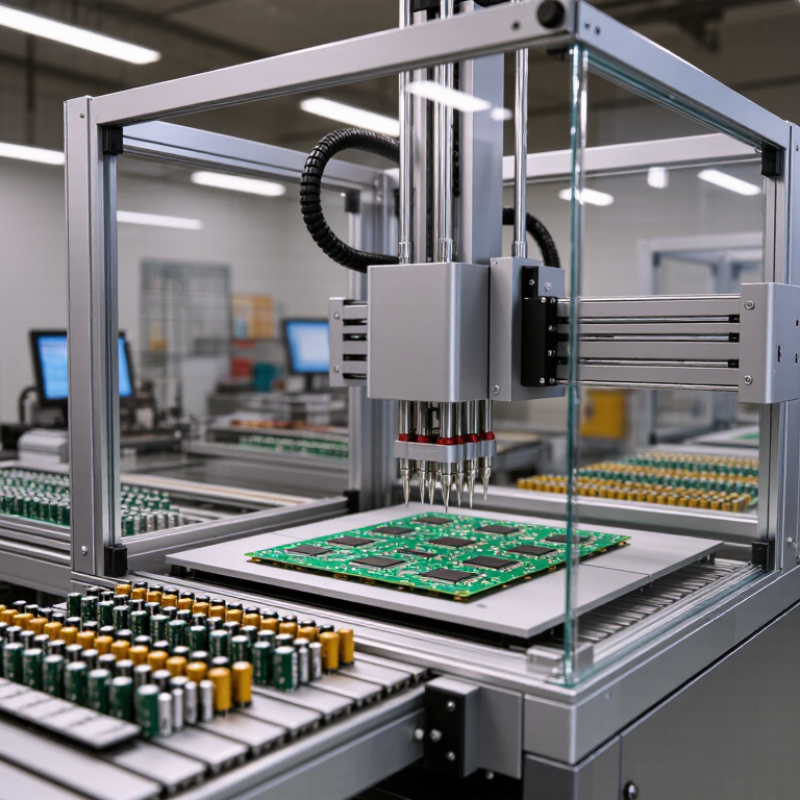
A pick-and-place machine transfers surface-mount components onto solder-paste-covered pads. Feeders present parts from reels or trays, while vacuum nozzles lift them. A vision system checks each part’s position and orientation before placement. Board fiducials help the machine align its coordinates with the actual panel. Small details matter. A shifted feeder, worn nozzle, or dirty camera can create repeated placement errors.

Machine specifications often highlight components per hour, but that figure rarely describes a complete production run. Actual output depends on board layout, component mix, feeder changes, inspection, and other line equipment. A compact board with many small components may require slower, more precise handling. A high-speed setting can look impressive on paper. Not always. Ask for trials using representative boards and measure both placement quality and changeover time.

Automation also responds to staffing pressures, though those figures are not specific to PCB assembly. Deloitte and the Manufacturing Institute’s 2024 workforce study projects 3.8 million U.S. manufacturing job openings by 2033, with 1.9 million potentially unfilled. That context helps explain investment in automated placement, but machines still need skilled setup and maintenance. When comparing equipment, check supported package sizes, placement accuracy, feeder capacity, and software changeover steps. Then inspect a real board under magnification: a component can appear seated while sitting slightly off its pads.
How Pick and Place Machines Operate

A pick and place machine transfers small electronic components from feeders onto a printed circuit board. The process begins when a programmed job tells the machine which component to collect and where to put it. Feeders present parts in a consistent position, while a vacuum nozzle lifts each one. A camera checks the component’s orientation and dimensions before placement.

Board cameras locate fiducial marks, which help the system align its coordinates with the actual board. The machine can then correct for slight shifts instead of relying only on the design file. Its motion system moves the nozzle over a solder-paste pad, lowers the component, and releases it gently. Small errors matter. A rotated resistor or poorly centered chip can cause trouble during soldering.

The cycle repeats across the board, often with different nozzle sizes for different component shapes. After placement, inspection can reveal missing, tilted, or visibly misaligned parts. Still, vision systems do not catch every problem, and setup is less tidy than diagrams suggest. Worn nozzles, inconsistent tape feeding, or uneven solder paste can affect results. Not always. Operators may need to adjust pickup height, lighting, or placement force when the machine struggles with a particular part. Regular checks help keep the process repeatable, but even a well-programmed machine needs sensible setup and human review.

Key Factors for Comparing PCB Assembly Machines

10 Best Pick and Place Machines for PCB Assembly

Key Factors for Comparing PCB Assembly Machines

When comparing pick-and-place machines, start with the boards and components you actually build. Check placement accuracy, repeatability, feeder capacity, and supported package sizes. A fine-pitch connector may need tighter control than a large resistor. Ask for results on a representative board, not just a specification sheet. Numbers can impress. Test conditions matter.

Throughput is useful, but include changeover time, programming effort, and recovery from feeder errors. Review the vision system, nozzle range, and software workflow. Can operators correct a misplaced component without stopping the line for long? Compare service access, spare-part availability, and training requirements, too. These details affect uptime and are easy to overlook. A fast demo may not reflect a mixed-product shift.

Tips: Bring a sample PCB, component list, and production target to each evaluation. Track defects and changeover minutes during a realistic trial. One successful run is not enough; performance may vary across shifts, operators, and board revisions.

10 Best Pick and Place Machines for PCB Assembly

Choosing among the 10 best pick and place machines for PCB assembly starts with the board, not the brochure. Manual and entry-level desktop machines suit prototypes and short runs. Benchtop systems add repeatable placement for small production batches. Single-head machines can be easier to maintain, while dual-head designs may increase throughput. Modular platforms let shops expand capacity as orders grow.

For finer-pitch components, compare camera alignment, nozzle range, feeder capacity, and placement accuracy. Vision-guided machines can correct small board or component shifts, but setup still matters. High-speed systems favor large, repetitive runs; flexible machines handle frequent product changes. Inline machines fit connected production lines, while standalone units offer a simpler footprint. Compact machines can work well in a crowded lab. Measure actual floor space, including feeder access.

Ask for a trial using your own PCB and component mix. Check placement results under realistic shift conditions, not just ideal demonstrations. Record setup time, misplacements, changeover effort, and operator training needs. A machine with impressive speed may slow down when feeders are changed often. I have seen specifications look reassuring, yet awkward software add friction. That deserves a closer look. Confirm local service access, spare-part availability, and calibration procedures before purchase. The best fit is the machine your team can run consistently, with documented settings and a clear plan for inspection.

These broad industry ranges represent approximate rated placement speeds, not guaranteed production output. Actual throughput depends on board design, component mix, feeder setup, and other production conditions.

Choosing a Machine for Different Production Needs

Choosing a pick and place machine starts with the work you actually run, not the fastest speed on a specification sheet. A prototype shop may build a few boards each week, with frequent changes between designs. A flexible machine with quick feeder setup can save more time than a high-speed system. For steady, larger batches, feeder capacity and reliable throughput become more important. Every extra changeover costs time.

Check the details against real jobs. Measure your largest board and smallest components, then confirm the machine can handle both. Review placement accuracy, feeder compatibility, programming tools, and local maintenance support. Ask how long a typical changeover takes, and whether one operator can manage loading and inspection. A machine that looks ideal on paper may feel awkward in a crowded workspace. I would not treat any single specification as decisive; actual results depend on board design, materials, and operator experience.

Tips: Bring sample boards and a realistic component list to a demonstration. Time a setup change, inspect a fine-pitch placement, and ask about spare parts. Keep some budget for training. It is easy to underestimate that need.

10 Best Pick and Place Machines for PCB Assembly — Choosing a Machine for Different Production Needs

Machine Type Typical Placement Rate Typical Board Capacity Typical Component Range Best Suited For Key Consideration
1. Manual benchtop placer About 100–500 CPH Small prototypes; capacity depends on the work surface and fixtures Common chip components and larger packages; operator-dependent Hobby work, engineering samples, and very low-volume assembly Low purchase cost, but throughput and repeatability rely heavily on operator skill.
2. Assisted benchtop placer About 500–2,000 CPH Small to medium boards, often processed individually Typical surface-mount parts; package limits vary by nozzle and vision system Prototyping labs and small businesses moving beyond hand placement Check feeder capacity and software support before scaling up.
3. Entry-level desktop automatic placer About 2,000–5,000 CPH Small to medium-format boards; confirm the machine’s stated limits Common chip parts and many standard IC packages Low-volume production and frequent design changes Rated speed may exceed real output when feeders, changeovers, or inspection are limiting factors.
4. Compact single-gantry machine About 5,000–10,000 CPH Small to medium boards, usually with conveyor or fixture handling A broad mix of chip components and standard ICs, depending on tooling Growing manufacturers with steady, moderate-volume demand A practical balance of footprint, automation, and production rate.
5. Flexible modular placer About 10,000–25,000 CPH per placement module Medium to large panels; configuration-dependent Mixed component sizes, subject to head and nozzle configuration Medium-volume production with varied product mix Modular layouts can be adapted, but line balancing and setup planning matter.
6. High-speed chip-shooter line machine About 30,000–80,000 CPH under optimized conditions Conveyor-fed boards or panels within the configured line limits Primarily small, high-volume chip components High-volume products with many small passive components Fast chip placement may need to be paired with a flexible machine for larger parts.
7. Fine-pitch precision placer About 5,000–30,000 CPH, depending on accuracy and component mix Small to large boards, depending on the platform Fine-pitch ICs, small passives, and precision packages supported by its vision system Dense boards and assemblies with tight placement requirements Evaluate placement accuracy, calibration, and inspection capability—not speed alone.
8. Large-board or long-board placer About 10,000–40,000 CPH, configuration-dependent Extended board or panel formats within the machine’s specified conveyor range Standard surface-mount parts; supported mix depends on the head setup Lighting, industrial control, and other assemblies using elongated boards Check board support, transport stability, and allowable panel dimensions.
9. Odd-form and mixed-technology placer About 1,000–15,000 CPH, depending on parts and process Board capacity varies with component height and handling requirements Connectors, larger packages, and selected non-standard components Assemblies combining conventional SMT with bulky or unusual parts Confirm component height, gripping method, and any adhesive or insertion requirements.
10. Multi-gantry high-volume placer About 50,000–150,000+ CPH across configured heads, under optimized conditions Conveyor-fed production boards or panels within line specifications High-speed chips and a broader mix when equipped with suitable heads Large-scale production with stable demand and high equipment utilization Requires investment in feeders, programming, maintenance, and balanced upstream and downstream equipment.

Note: Placement rates and board capacities are indicative ranges for machine categories, not guaranteed specifications. Actual output depends on component mix, board design, feeder setup, program optimization, changeovers, and production conditions. Verify the stated limits and performance data for the specific machine configuration before purchasing.